Medical Guide
What Does a Hair Transplant
Actually Involve?
A step-by-step visual guide to the procedure, explained in plain language. No medical jargon, just honest information to help you make an informed decision.
Scroll down to begin your journey ↓
Understanding Hair Loss
Male pattern baldness (androgenetic alopecia) affects approximately 50% of men by age 50. It's caused by a combination of genetics and the hormone DHT (dihydrotestosterone), which gradually shrinks hair follicles until they stop producing visible hair.
The Norwood Scale classifies male hair loss into 7 stages, from minor temple recession (Stage 1) to extensive loss (Stage 7). Most hair transplant candidates are between Stages 3-6.
The good news: the hair follicles at the back and sides of your head are genetically resistant to DHT. This is the "donor area" — and it's the key to a successful hair transplant.

The Consultation
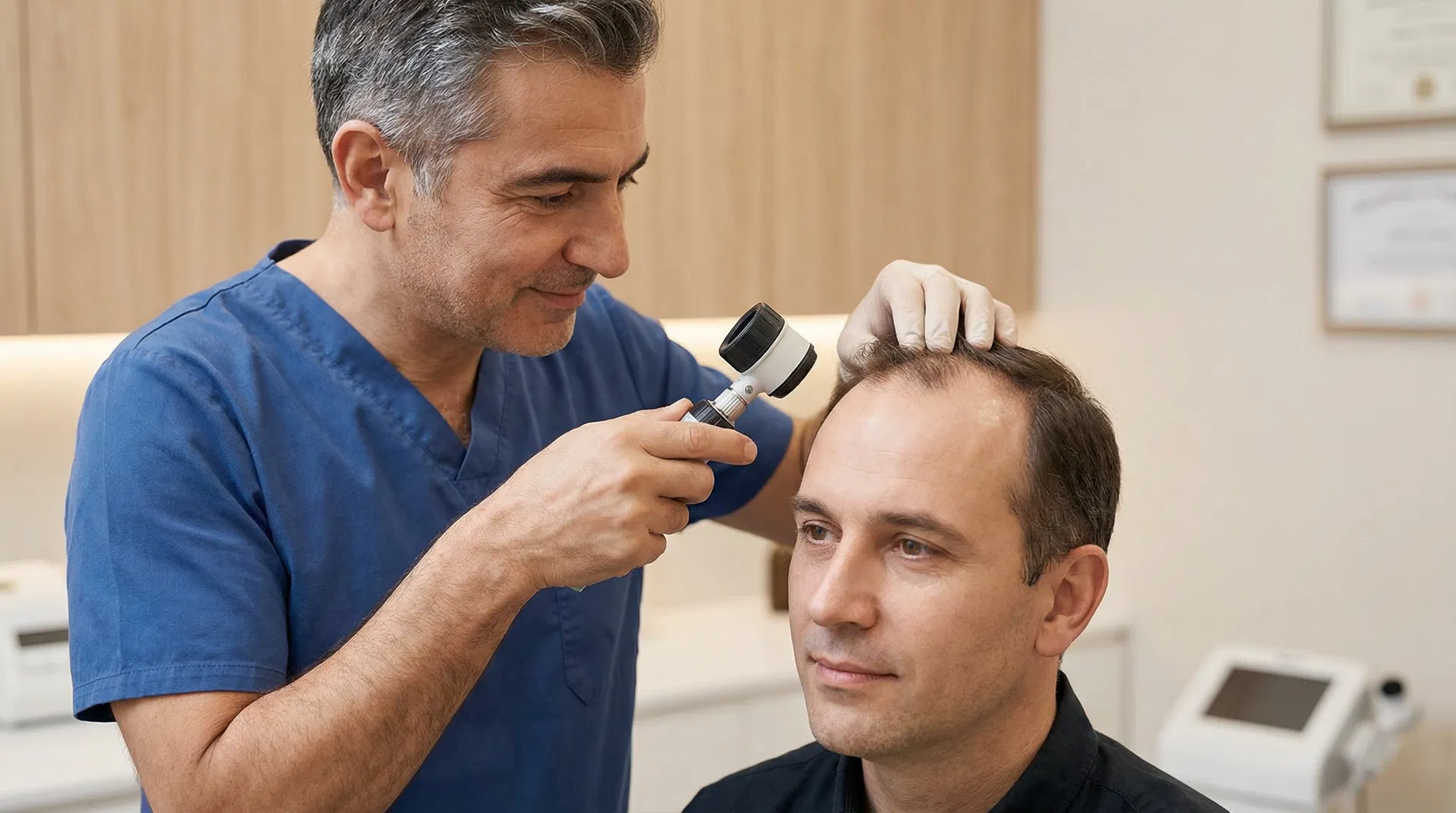
Before any procedure, you'll have a thorough consultation — either in person or via video call. The doctor will:
FUE vs. DHI: The Two Main Techniques
Both are modern, minimally invasive methods. Here's how they compare:
FUE (Follicular Unit Extraction)
Individual follicles are extracted from the donor area using a micro-punch tool, then implanted into tiny channels created in the recipient area.
DHI (Direct Hair Implantation)
Follicles are extracted and immediately implanted using a special Choi pen, eliminating the need for pre-made channels.
Procedure Day: What to Expect
Morning: You'll arrive at the clinic, change into a gown, and the doctor will finalise your hairline design. You'll approve the design before anything begins.
Local Anaesthesia: The donor and recipient areas are numbed with local anaesthesia. This is the only uncomfortable part — a brief stinging sensation that lasts a few minutes. After that, you won't feel pain.
Extraction Phase (2-3 hours): Individual follicular units are carefully extracted from the donor area. You'll be lying face down, and most patients watch movies or listen to music.
Lunch Break: Yes, you get a lunch break! The clinic will provide a meal or you can bring your own.
Implantation Phase (3-4 hours): The extracted grafts are carefully implanted into the recipient area following the pre-designed hairline. You'll be lying back, and again, most patients relax with entertainment.
Completion: The area is cleaned, bandaged, and you'll receive detailed aftercare instructions. You'll leave the clinic the same day.

Recovery & Results Timeline
Have Questions About the Procedure?
Our team can connect you with experienced surgeons who will answer all your questions. Free and confidential.