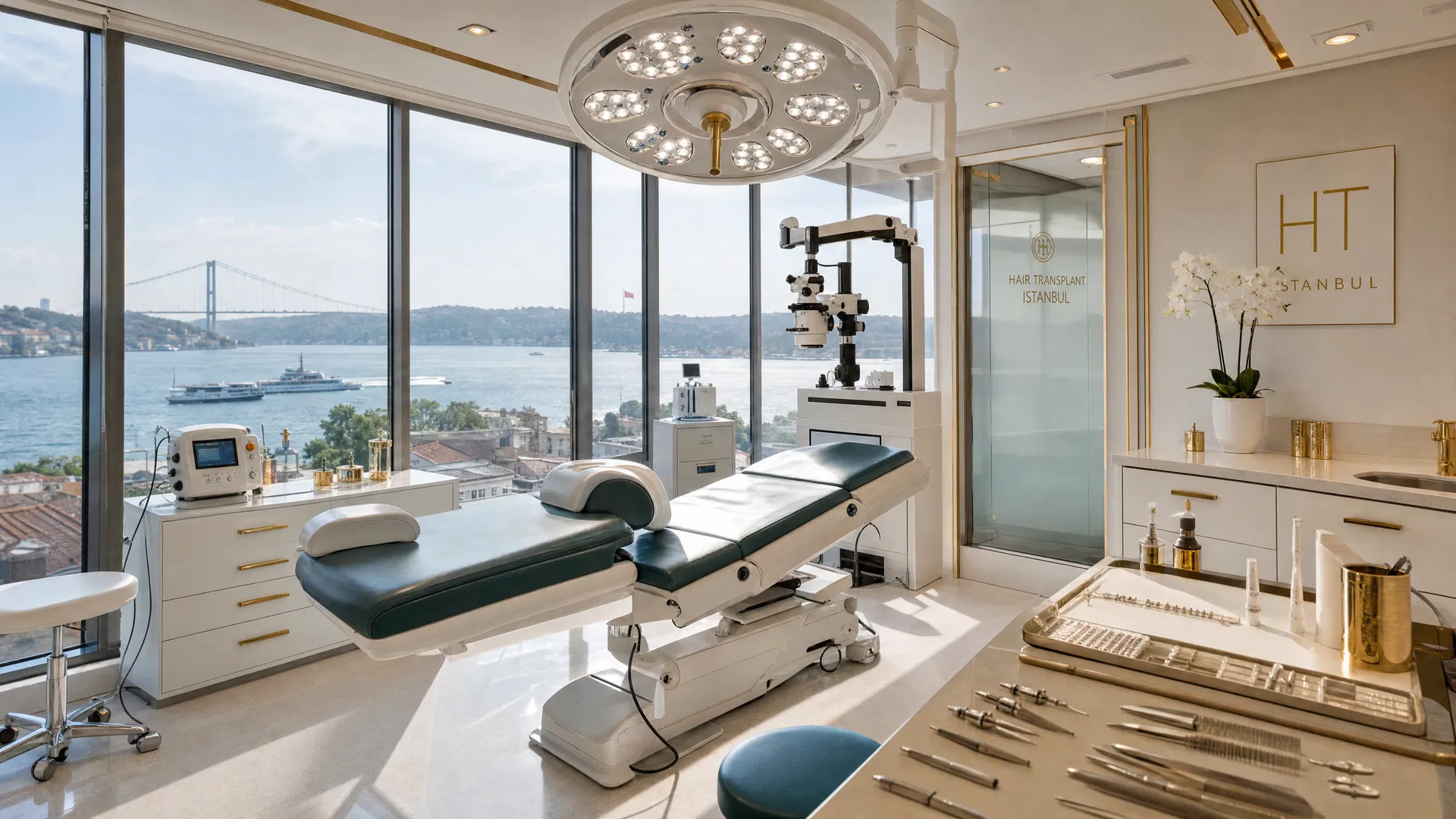
If you've been researching hair restoration options, you've probably come across both "hair implants" and "hair transplants" and wondered whether they're the same thing. The short answer is: they're not. But the confusion is understandable, because the internet — and even some clinics — use these terms interchangeably. This guide breaks down the real medical difference between the two, explains what Turkish clinics actually offer, and helps you understand why the distinction matters for your results.
The Core Difference: Your Own Hair vs. Synthetic Fibres
At its most fundamental level, the difference between a hair transplant and a hair implant comes down to biology. A hair transplant takes your own living hair follicles from one part of your scalp (typically the back and sides, where hair is genetically resistant to balding) and relocates them to thinning or bald areas. Because the transplanted follicles are your own tissue, they continue to grow naturally for the rest of your life. There is no risk of rejection, no foreign material involved, and no ongoing maintenance beyond normal hair care.
A hair implant, in the strict medical sense, refers to the surgical insertion of synthetic (artificial) hair fibres directly into the scalp. These are not real hair follicles — they are manufactured strands made from materials like biocompatible polymers. The most well-known brand is Biofibre, which has been used in parts of Europe and the Middle East. Unlike transplanted hair, synthetic implants do not grow, cannot be cut or styled in the same way, and carry a significantly higher risk of complications including infection, chronic inflammation, scarring, and rejection by the body's immune system.
It's worth noting that the United States Food and Drug Administration (FDA) banned synthetic hair implants decades ago due to their unacceptably high complication rates. While some countries still permit the procedure, it has largely fallen out of favour in the global medical community. When people search for "hair implants in Turkey," what they almost always find — and what Turkish clinics almost exclusively offer — is a hair transplant using real, living follicles.
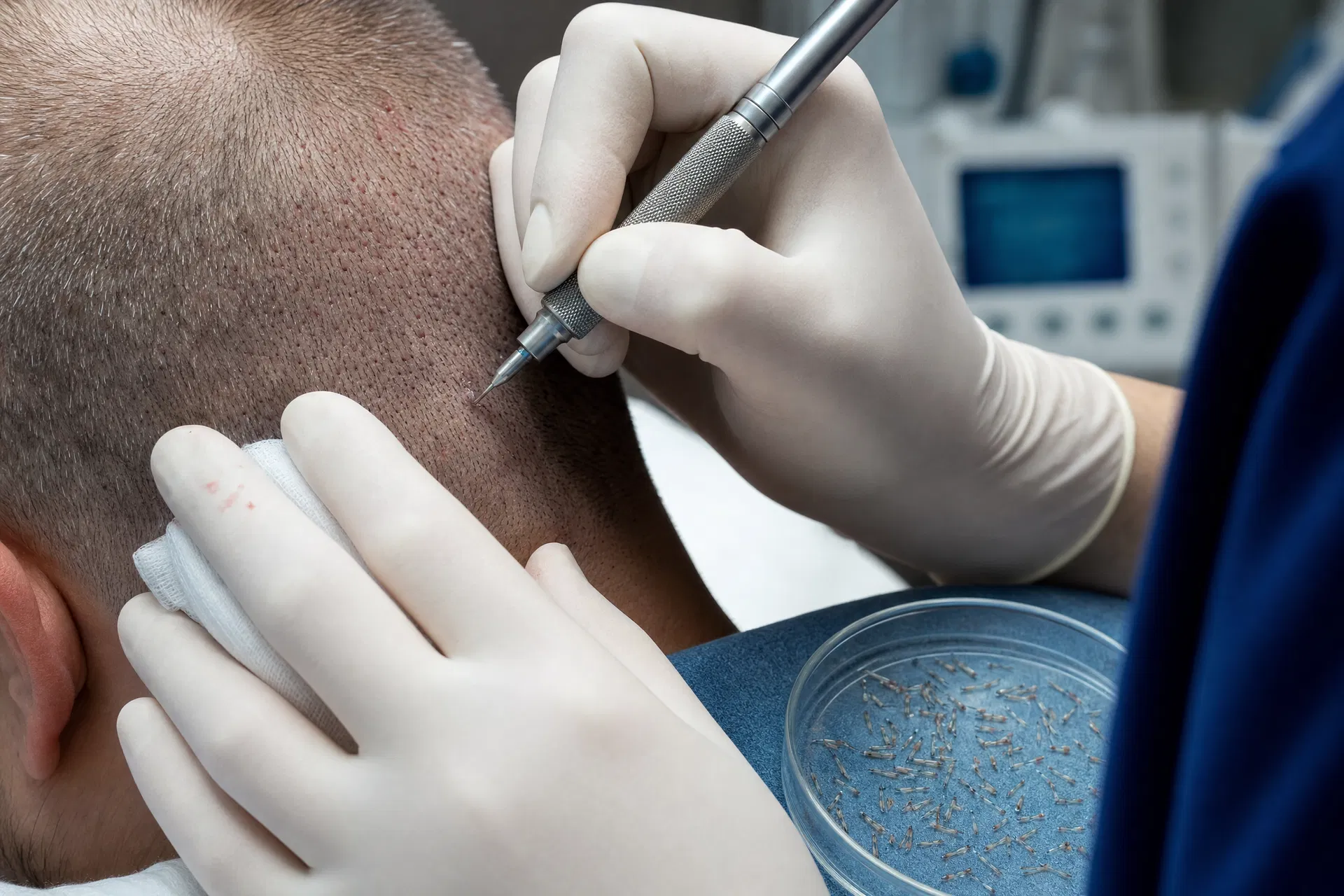
FUE extraction: Individual follicular units are carefully harvested from the donor area using a micro-punch tool, then stored before implantation.
Why People Confuse the Two Terms
The confusion between "hair implants" and "hair transplants" is largely a language problem. In everyday conversation, many people use the word "implant" to describe anything that gets put into the body — whether it's a dental implant, a breast implant, or hair being placed into the scalp. From a layperson's perspective, the act of implanting hair follicles into recipient sites during a transplant procedure sounds like it could reasonably be called an "implant." And in some languages, the translation between the two terms is even less clear.
Adding to the confusion is the DHI (Direct Hair Implantation) technique, one of the most popular methods used in Turkey. The word "implantation" is right there in the name. But DHI is absolutely a hair transplant — it uses your own living follicles, extracted one by one and then implanted directly into the recipient area using a specialized Choi Implanter Pen. The "implantation" in DHI refers to the method of placing the grafts, not to the use of synthetic material.
Some clinics also contribute to the confusion through their marketing. Because "hair implants" is a commonly searched term online, clinics may use it in their website copy or advertising to capture that search traffic, even though what they're actually offering is a transplant. This is why it's so important to look beyond the terminology and understand exactly what procedure you're signing up for.
What Turkish Clinics Actually Offer
Turkey has become the undisputed global capital of hair restoration, with an estimated 500+ clinics operating in Istanbul alone. The vast majority of these clinics perform hair transplants using one of three modern techniques: FUE (Follicular Unit Extraction), Sapphire FUE, or DHI (Direct Hair Implantation). All three methods use your own natural hair follicles — the difference lies in how the grafts are extracted and placed.
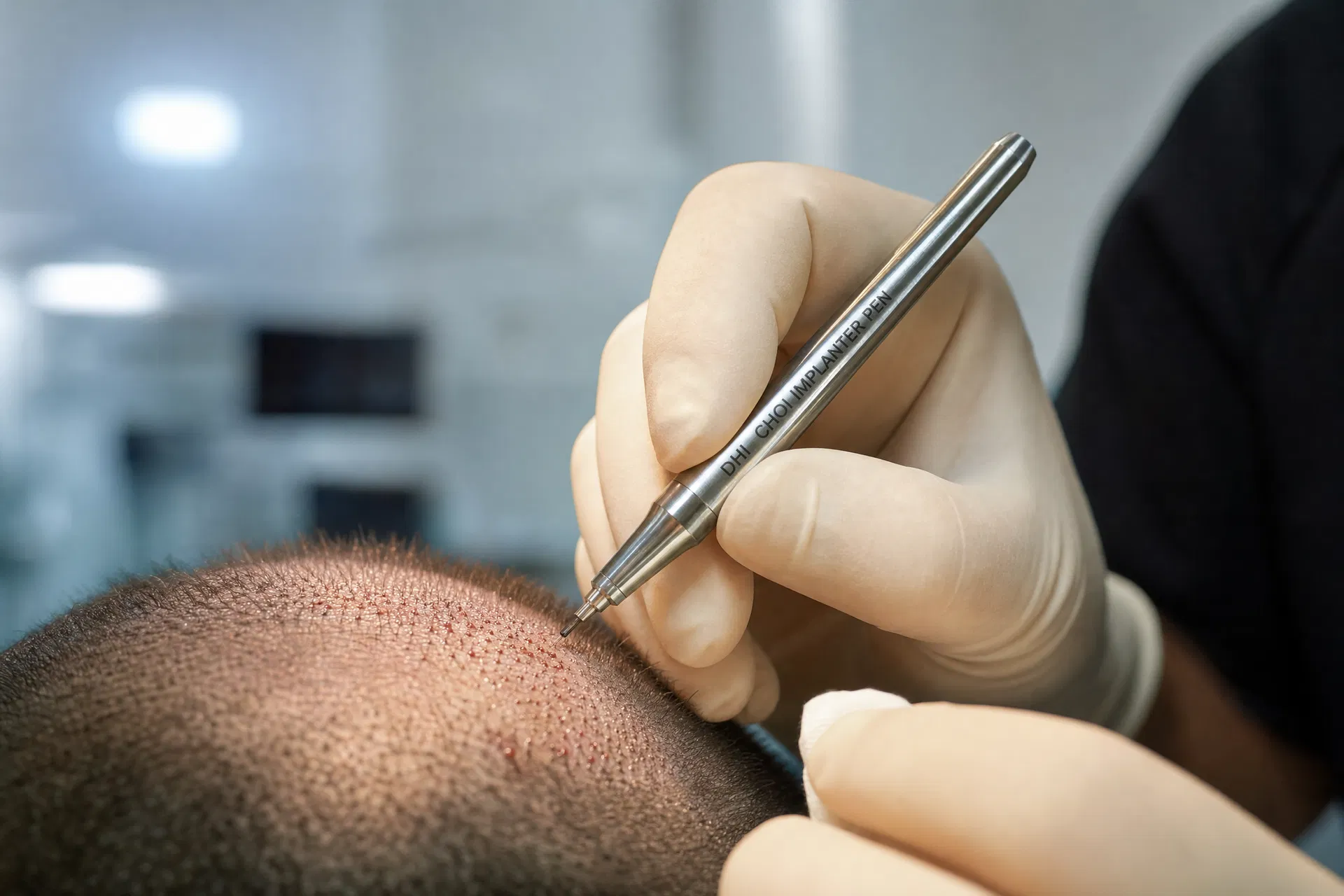
The DHI technique uses a Choi Implanter Pen to place follicles directly into the scalp without pre-made incisions, allowing for precise angle and depth control.
FUE (Follicular Unit Extraction)
FUE is the most widely performed hair transplant technique in Turkey and around the world. The surgeon uses a micro-punch tool (typically 0.6mm to 1mm in diameter) to extract individual follicular units from the donor area at the back of the head. These grafts are then stored in a nutrient solution while the surgeon creates tiny recipient channels in the balding area using either steel or sapphire blades. Finally, the grafts are carefully placed into these channels at the correct angle and depth to mimic natural hair growth patterns.
Sapphire FUE is a refinement of standard FUE where the recipient channels are created using blades made from synthetic sapphire crystal rather than steel. The sapphire blades allow for smaller, more precise incisions that heal faster and cause less tissue trauma. This typically results in reduced swelling, quicker recovery, and potentially denser packing of grafts. Many top Turkish clinics now offer Sapphire FUE as their standard technique.
DHI (Direct Hair Implantation)
DHI takes a different approach to the placement phase. After follicles are extracted (using the same micro-punch method as FUE), they are loaded directly into a Choi Implanter Pen — a hollow needle device that simultaneously creates the recipient channel and places the graft in one motion. This eliminates the need to pre-create channels, which means the grafts spend less time outside the body and the surgeon has more control over the angle, direction, and depth of each implanted follicle.
DHI is particularly popular for hairline work where precision is critical, and for individuals who want to add density to areas that still have existing hair (since no shaving of the recipient area is required in many cases). However, DHI procedures typically take longer and may cost slightly more than standard FUE.
Hair Transplant vs. Hair Implant: A Direct Comparison
| Factor | Hair Transplant | Synthetic Hair Implant |
|---|---|---|
| Material Used | Your own living hair follicles | Artificial polymer fibres |
| Permanence | Permanent — hair grows for life | Temporary — fibres degrade over time |
| Growth | Hair grows, can be cut and styled normally | Does not grow — fixed length forever |
| Rejection Risk | None (your own tissue) | High (foreign body response) |
| Infection Risk | Low with proper aftercare | Significantly elevated |
| Natural Appearance | Excellent — indistinguishable from native hair | Often looks artificial up close |
| FDA Approved | Yes | Banned in the US |
| Cost in Turkey | CAD $2,500 – $8,000 | Not commonly offered |
| Recovery Time | 7–14 days initial; full results at 12–18 months | Immediate appearance, ongoing complications |
| Maintenance | Normal hair care | Regular clinic visits, fibre replacement |
The Science Behind Hair Transplant Success
The reason hair transplants work so well comes down to a principle called donor dominance. Hair follicles at the back and sides of the scalp are genetically programmed to resist the effects of DHT (dihydrotestosterone) — the hormone responsible for male pattern baldness. When these follicles are moved to a balding area, they retain their genetic programming and continue to grow indefinitely, just as they would have in their original location.
This is why a well-performed hair transplant is considered a permanent solution. The transplanted hair will grow, fall out in normal cycles, and regrow — just like the rest of your hair. You can wash it, cut it, style it, and even colour it. After the initial shedding phase (which occurs 2–4 weeks post-procedure as the follicles enter a resting phase), new growth typically begins at 3–4 months and continues to thicken over the following year.
Graft survival rates at reputable Turkish clinics typically exceed 90%, with some of the top clinics reporting rates of 95% or higher. This means that the vast majority of transplanted follicles successfully establish blood supply in their new location and begin producing hair. The key factors that influence graft survival include the surgeon's extraction technique, how the grafts are stored between extraction and placement, the speed of the procedure, and the quality of post-operative care.
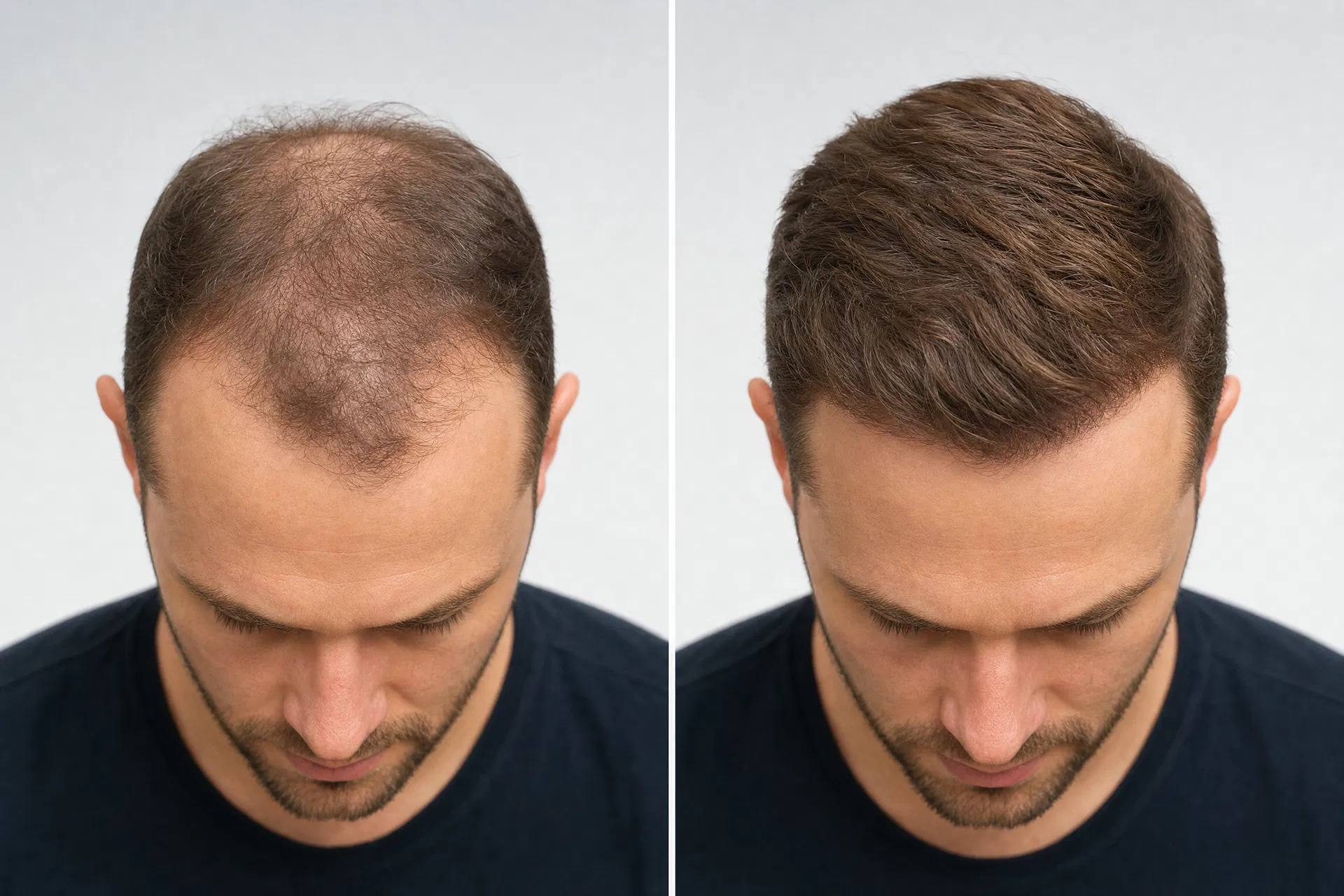
A typical hair transplant result at 12 months post-procedure, showing the transformation achievable with modern FUE techniques.
Why Turkey Became the World Leader in Hair Transplants
Turkey didn't become the global hair transplant capital by accident. Several factors converged over the past two decades to create the perfect conditions for a thriving medical tourism industry. First, the sheer volume of procedures performed means that Turkish surgeons and their teams accumulate experience at a rate that would be impossible in countries with lower demand. A busy Istanbul clinic might perform 10–15 procedures per day, giving their staff an extraordinary level of hands-on expertise.
Second, the cost advantage is substantial. A hair transplant that might cost CAD $15,000–$25,000 in Canada can be performed in Turkey for CAD $2,500–$8,000, often including hotel accommodation, airport transfers, and comprehensive aftercare. This isn't because Turkish clinics cut corners — it's because the cost of living, wages, and overhead are significantly lower in Turkey, allowing clinics to offer world-class facilities and equipment at a fraction of the price.
Third, competition among the hundreds of clinics in Istanbul drives continuous improvement. Clinics invest heavily in the latest technology, training, and patient experience because they know their reputation depends on delivering excellent results. Many have adopted proprietary techniques, invested in AI-assisted planning tools, and built dedicated multi-floor facilities specifically designed for hair restoration. The best Turkish clinics hold international accreditations from bodies like JCI (Joint Commission International) and TEMOS, and their surgeons are members of organizations like the International Society of Hair Restoration Surgery (ISHRS).

Istanbul's unique position at the crossroads of Europe and Asia, combined with world-class medical infrastructure, makes it the ideal destination for hair restoration tourism.
What About Non-Surgical Hair Replacement?
It's worth briefly addressing another category that sometimes gets lumped into the "hair implant" conversation: non-surgical hair replacement systems. These are essentially high-quality wigs or hairpieces that are bonded to the scalp using medical-grade adhesives. While modern hair systems can look remarkably natural, they are not a surgical procedure and require ongoing maintenance — typically needing to be removed, cleaned, and re-bonded every few weeks.
Hair replacement systems serve a different purpose than transplants. They can be a good option for people who don't have sufficient donor hair for a transplant, who have conditions like alopecia totalis, or who want an immediate cosmetic solution without surgery. However, they are a commitment — both financially (ongoing costs of maintenance and replacement) and in terms of lifestyle (limitations on swimming, certain sports, etc.). For most men experiencing typical male pattern baldness with adequate donor hair, a transplant offers a more permanent and low-maintenance solution.
What to Look For When Choosing a Clinic in Turkey
Whether you've been searching for "hair implants" or "hair transplants," the most important thing is choosing the right clinic. Here are the key factors that separate excellent clinics from mediocre ones:
Surgeon involvement: At the best clinics, a qualified surgeon personally designs the hairline, oversees the extraction, and is present throughout the procedure. At lower-quality clinics, technicians may perform most of the work with minimal surgeon oversight. Ask specifically about the surgeon's role and how many procedures they personally oversee per day.
Realistic expectations: A trustworthy clinic will give you an honest assessment of what's achievable based on your donor hair density, the extent of your hair loss, and your age. Be wary of clinics that promise unrealistically high graft counts or guarantee specific results. A conservative approach that delivers a natural-looking outcome is always better than an aggressive one that depletes your donor area.
Transparent pricing: Reputable clinics provide clear, all-inclusive pricing without hidden fees. Most top Turkish clinics offer packages that include the procedure, hotel accommodation, airport transfers, medications, and follow-up care. If a quote seems too good to be true, it probably is.
Verifiable results: Look for clinics that share genuine before-and-after photos, video testimonials, and reviews on independent platforms. The best clinics have extensive galleries showing results at various stages of growth (3 months, 6 months, 12 months) across different hair types and levels of hair loss.
Aftercare programme: The procedure itself is only half the story. Proper aftercare — including detailed washing instructions, medication protocols, and follow-up consultations — is essential for optimal graft survival. The best clinics maintain contact with their clients for 12–18 months post-procedure and offer guarantees or touch-up sessions if needed.
The Bottom Line for Canadians
If you're a Canadian man researching hair restoration and you've been Googling "hair implants in Turkey," here's what you need to know: what you're looking for is almost certainly a hair transplant. The procedure uses your own hair, produces permanent and natural-looking results, and is performed at a fraction of the Canadian price by surgeons who do this all day, every day.
Synthetic hair implants are an outdated, largely abandoned technology that no reputable Turkish clinic offers. The terminology confusion is just that — a confusion of terms. When Turkish clinics advertise "hair implants," they mean the same thing as a hair transplant: a safe, proven procedure that relocates your own living follicles to restore density where you need it most.
The real question isn't "implants vs. transplant" — it's which clinic and which technique (FUE, Sapphire FUE, or DHI) is the best fit for your specific situation. And that's exactly what we help Canadians figure out every day.
Ready to Explore Your Options?
Browse our in-depth clinic reviews to find the right fit for your hair transplant in Turkey. Every clinic is independently reviewed with real customer feedback.
Browse Top ClinicsKey Takeaways
- Hair transplants use your own living follicles and produce permanent, natural results.
- Synthetic hair implants are an outdated technology banned by the FDA — not what Turkish clinics offer.
- DHI stands for "Direct Hair Implantation" but is a transplant technique using real hair — don't let the name confuse you.
- Turkey offers world-class hair transplants at 60–80% less than Canadian prices, with graft survival rates above 90%.
- Choose carefully: Look for surgeon involvement, realistic expectations, transparent pricing, and strong aftercare.