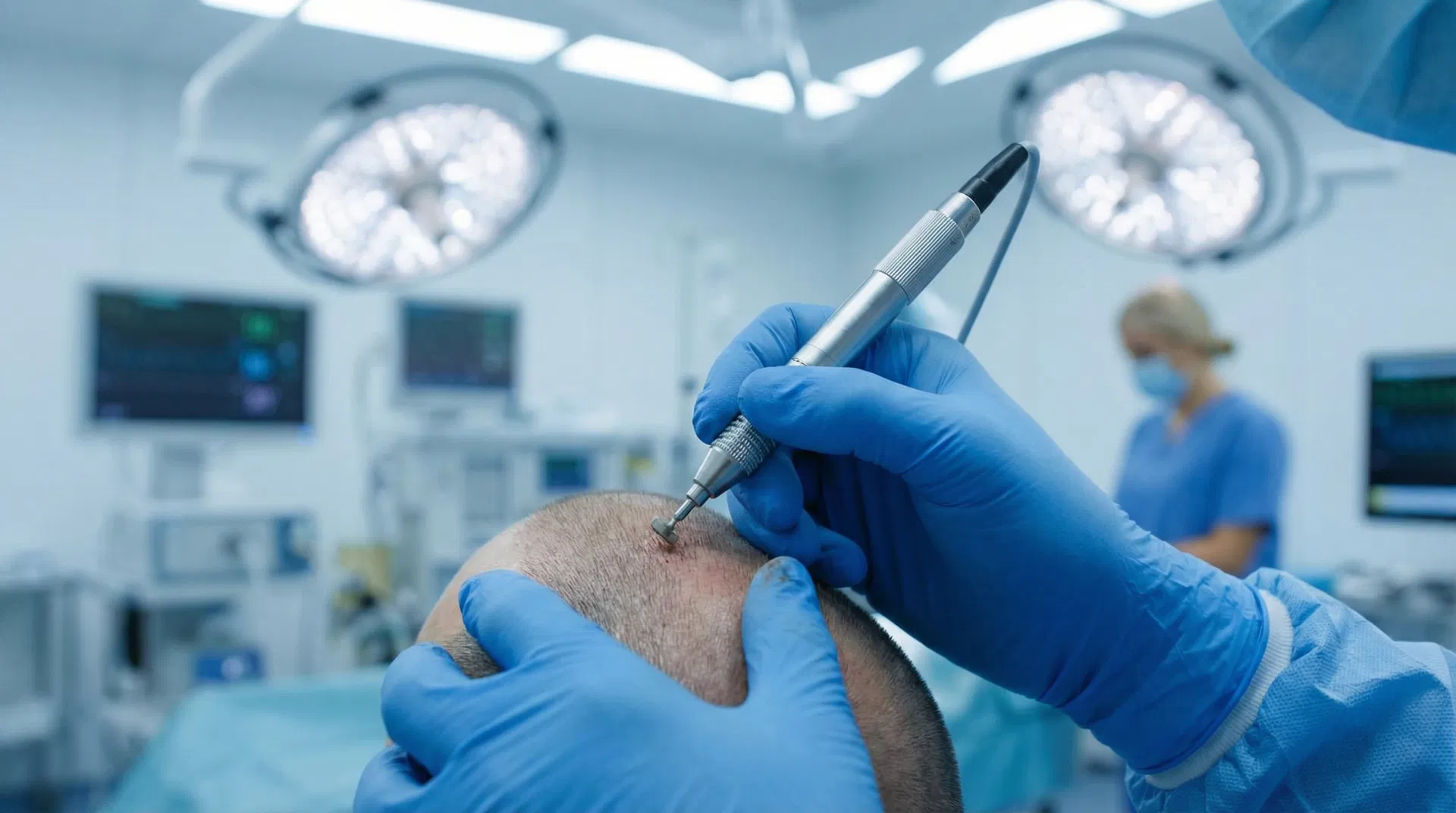
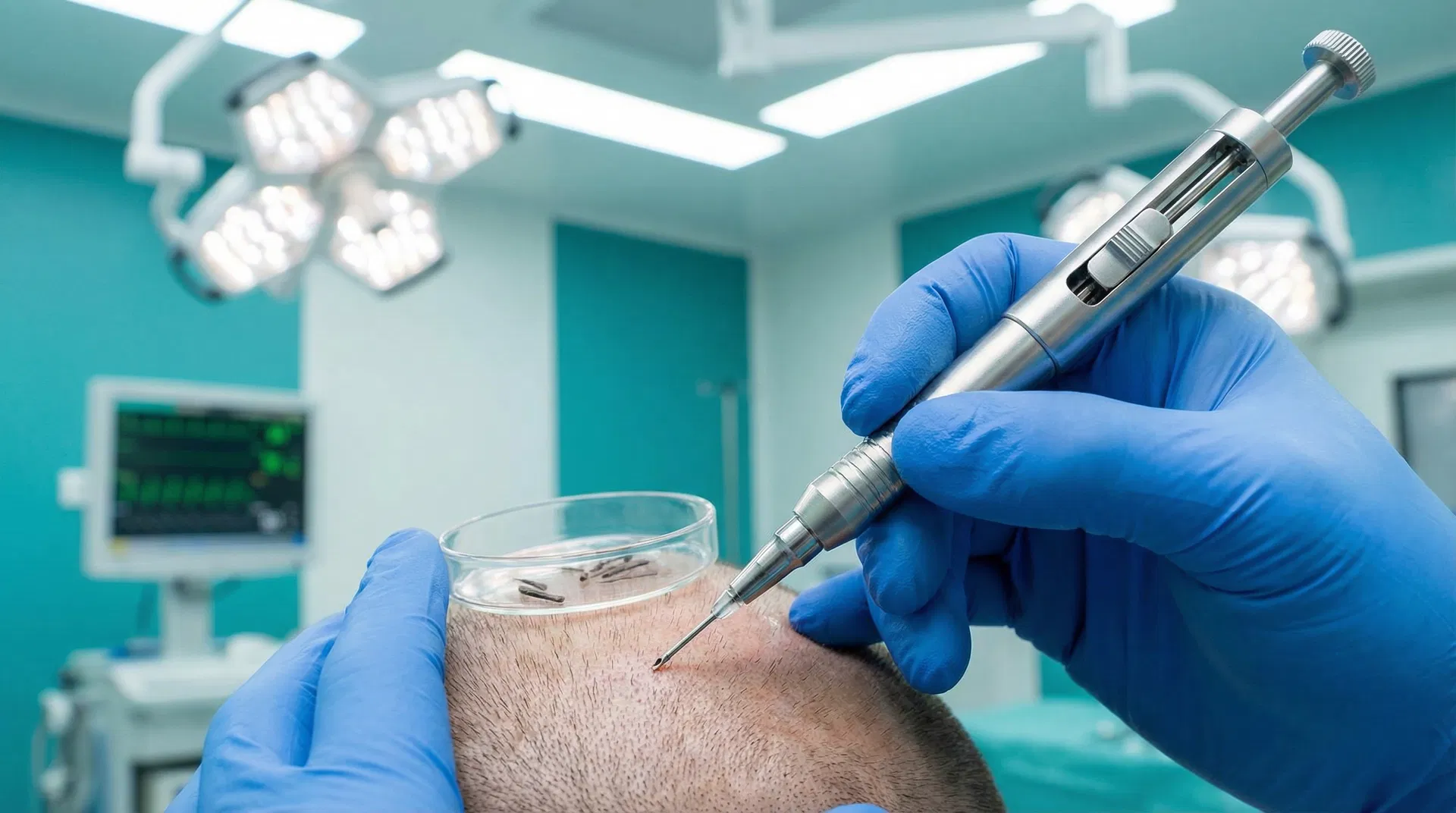
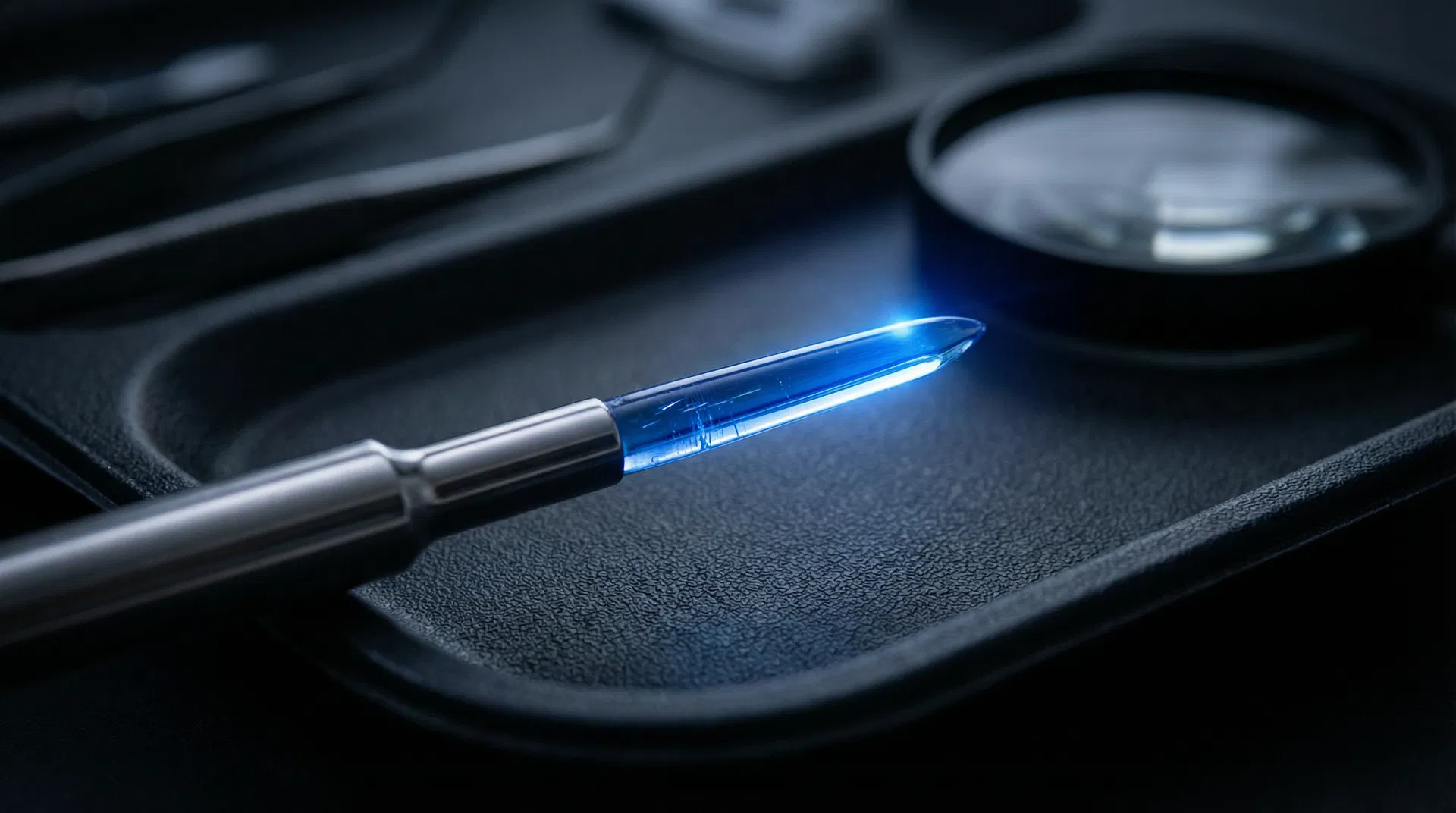
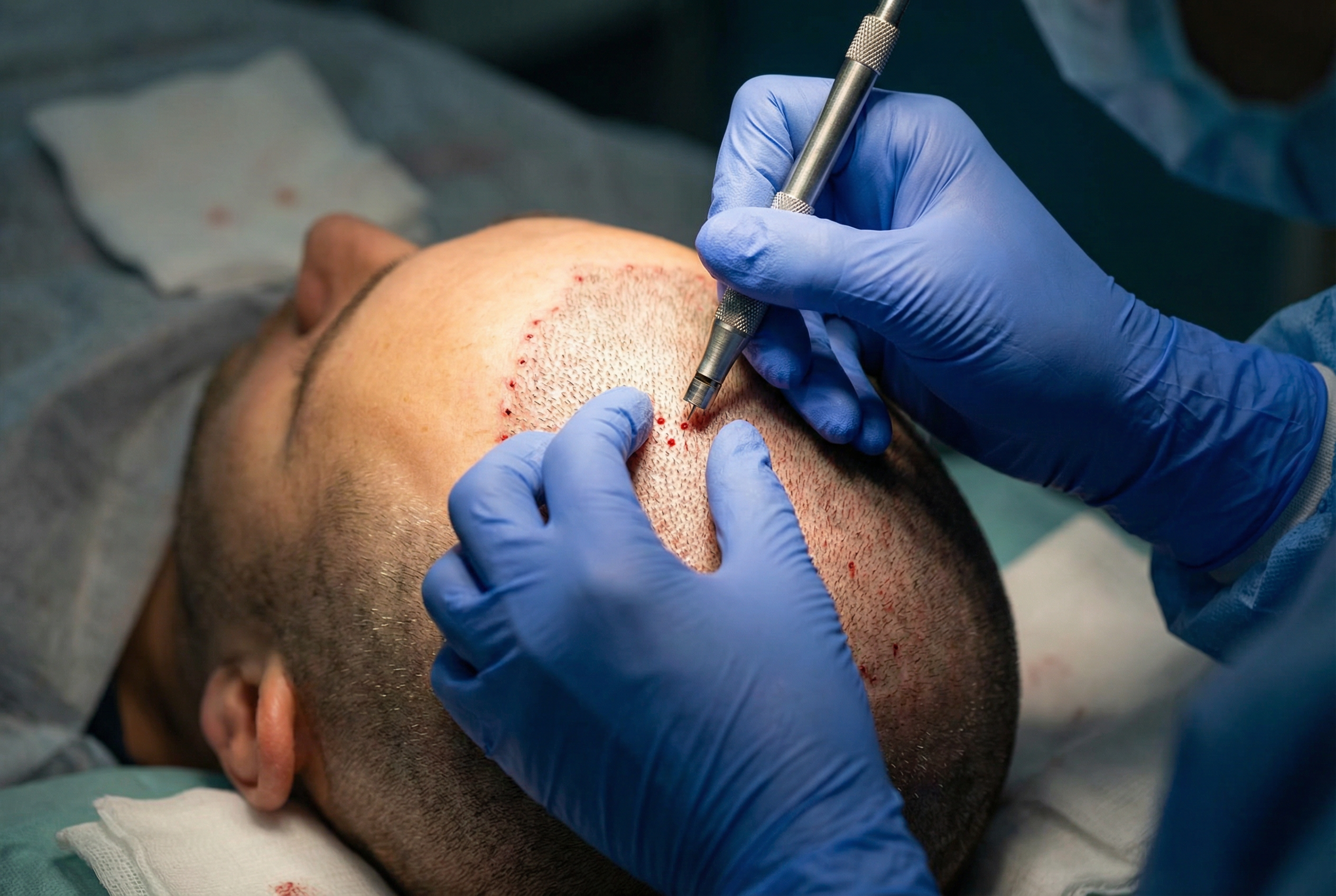
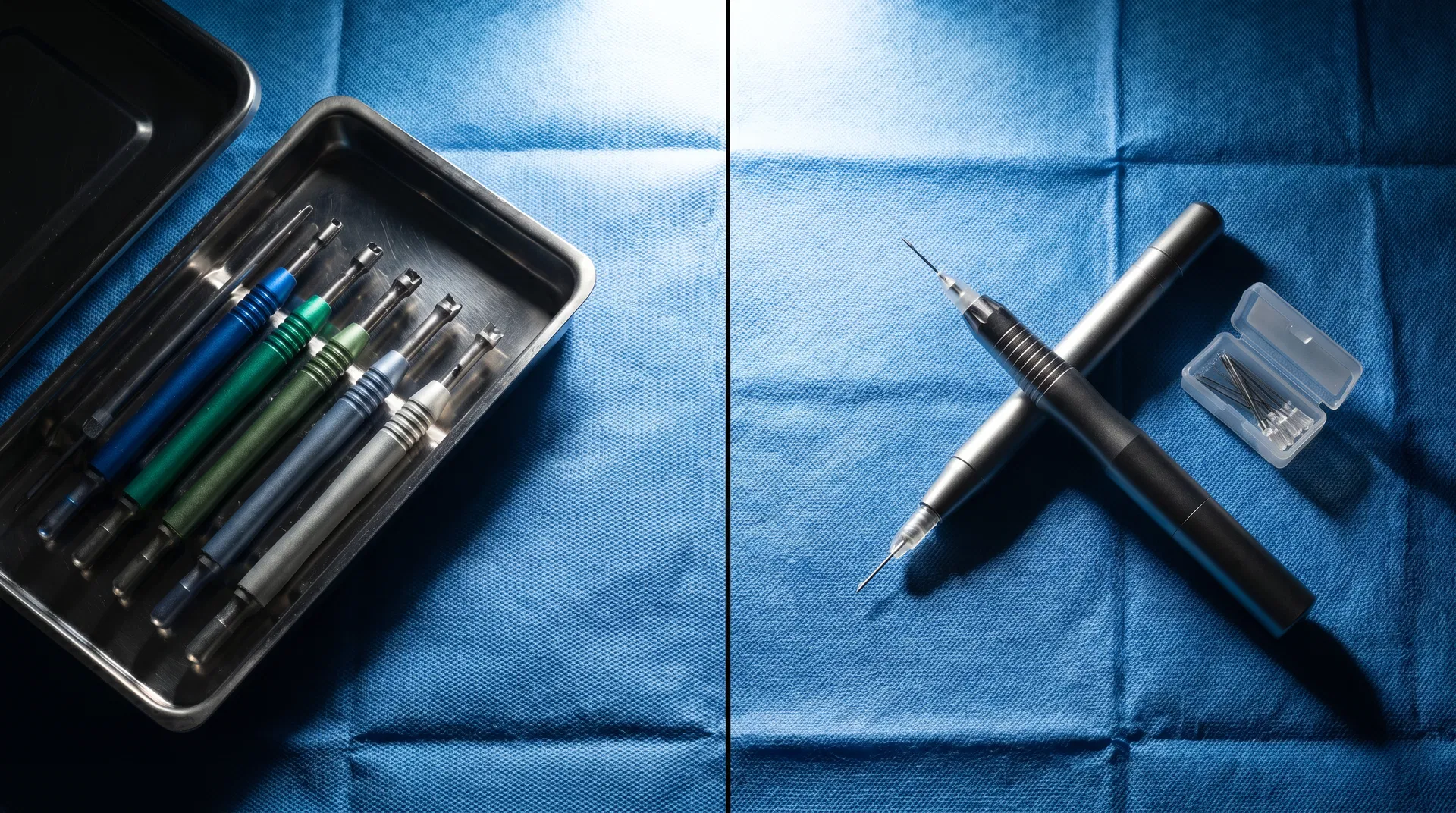
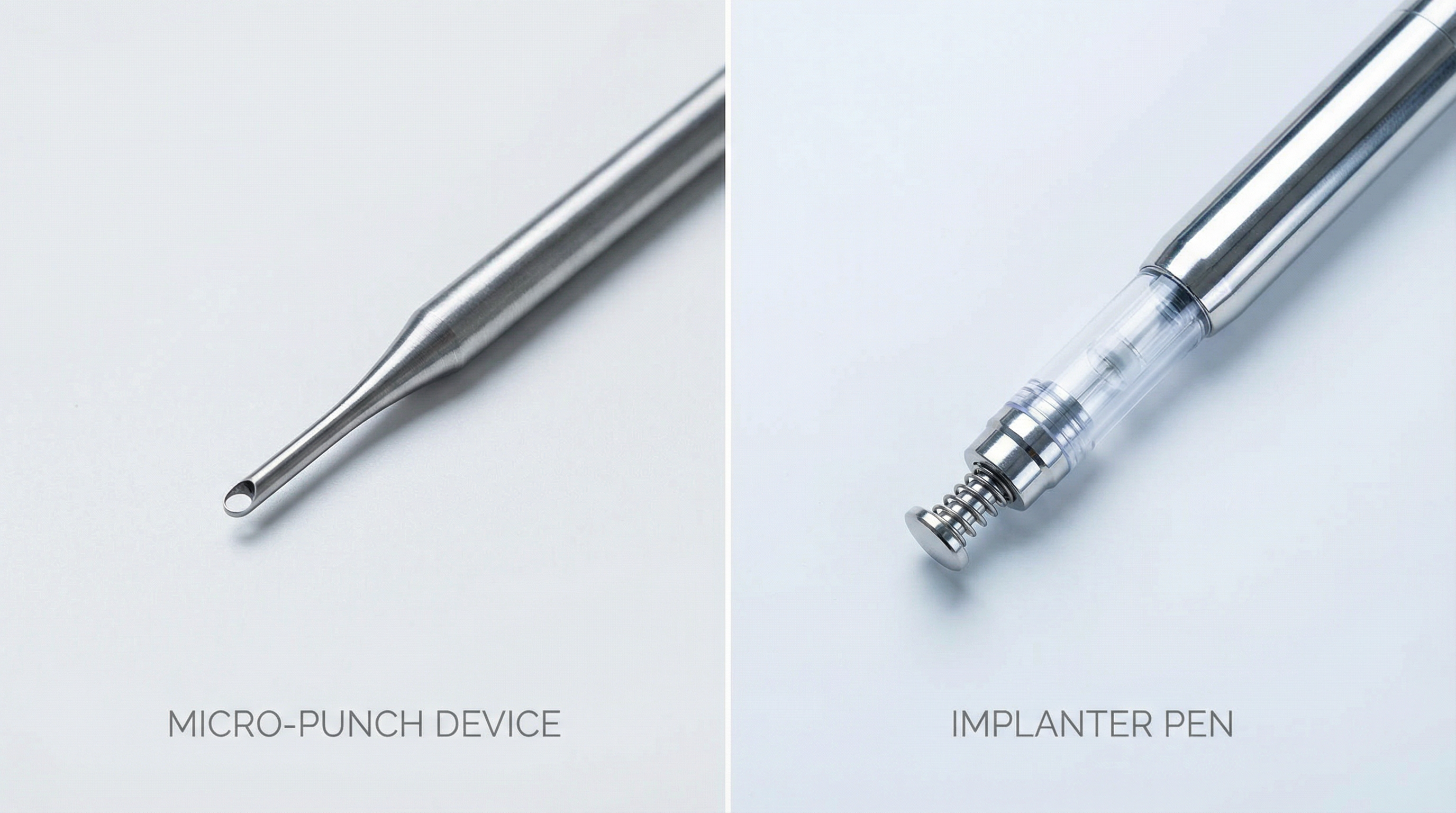
The primary distinction between FUE and DHI lies in the implantation step. With FUE, the surgeon first extracts the hair follicles from the donor area and then creates channels in the recipient area before implanting the grafts. In DHI, the surgeon uses a specialized tool called a Choi Implanter Pen to simultaneously create the channel and implant the graft in one motion. This key difference influences several aspects of the procedure.
 Procedure Duration:
 An FUE session for 3,000 grafts typically takes between 6 to 8 hours, whereas a DHI session for the same number of grafts can last from 8 to 10 hours due to the meticulous nature of the implantation process.
Maximum Grafts: FUE generally allows for a higher number of grafts, sometimes up to 4,000 or 5,000, to be transplanted in a single session. DHI sessions usually max out at a lower number, around 3,000 to 4,000 grafts.
Graft Survival Rate: Both techniques boast high graft survival rates, typically between 85 to 95 percent. Some experts suggest DHI may have a slight edge, with rates from 90 to 95 percent, because the grafts spend less time outside the body before implantation.
Recovery and Healing: Recovery times are quite similar, though DHI can sometimes offer a slightly faster healing process. With DHI, patients might see scabs fall off within 5 to 8 days, compared to 7 to 10 days for FUE. Not sure which technique suits you best?
Shaving: A full shave of the donor area is standard for FUE procedures. DHI, however, offers an
"unshaven" option, which is a significant advantage for patients who value discretion and want to return to their daily lives without obvious signs of a procedure.
Not sure whether FUE or DHI is right for you? Get a FREE consultation today!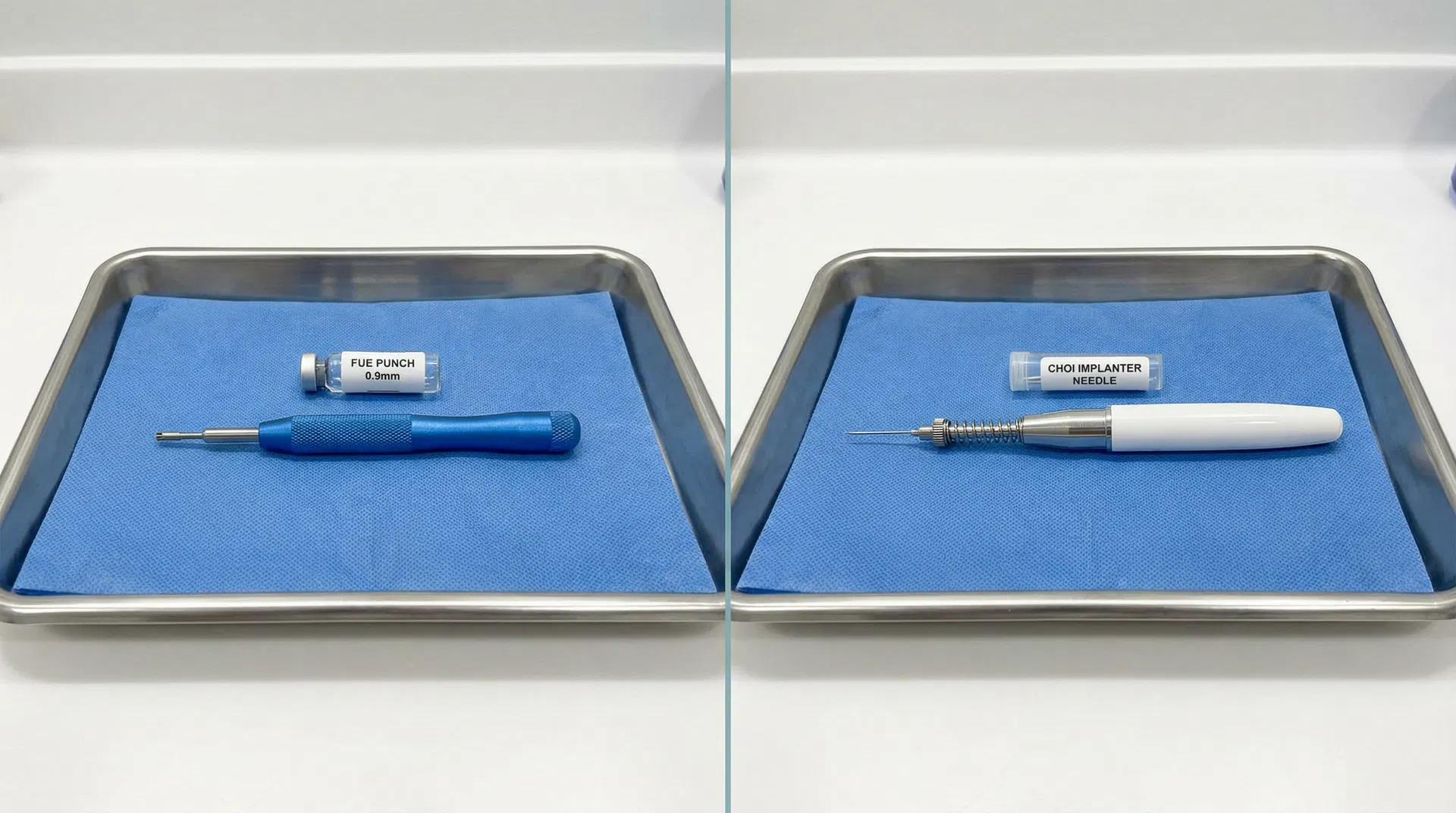
 Deciding between Follicular Unit Extraction (FUE) and Direct Hair Implantation (DHI) is a common challenge for individuals considering a hair transplant. While both are advanced methods that can deliver outstanding, natural looking results, they have key differences in their approach. The most critical factor in any hair restoration procedure is the expertise of the surgeon and their medical team. A skilled surgeon can achieve a fantastic outcome with either technique. However, understanding the nuances of FUE and DHI can help you have more informationrmed discussion with your doctor.
 Generally, FUE may be the recommended path if you are looking to cover a large area of hair loss, such as the crown and hairline, and need a significant number of grafts, often over 3,000 in one sitting. It is also typically the more budget friendly option. On the other hand, DHI is often preferred for patients who want to achieve the highest possible density in a specific area, like the hairline, or for those who wish to add density amongst existing hairs without shaving their entire head. The precision of the DHI method often comes with a higher price point, usually 20 to 40 percent more than FUE.
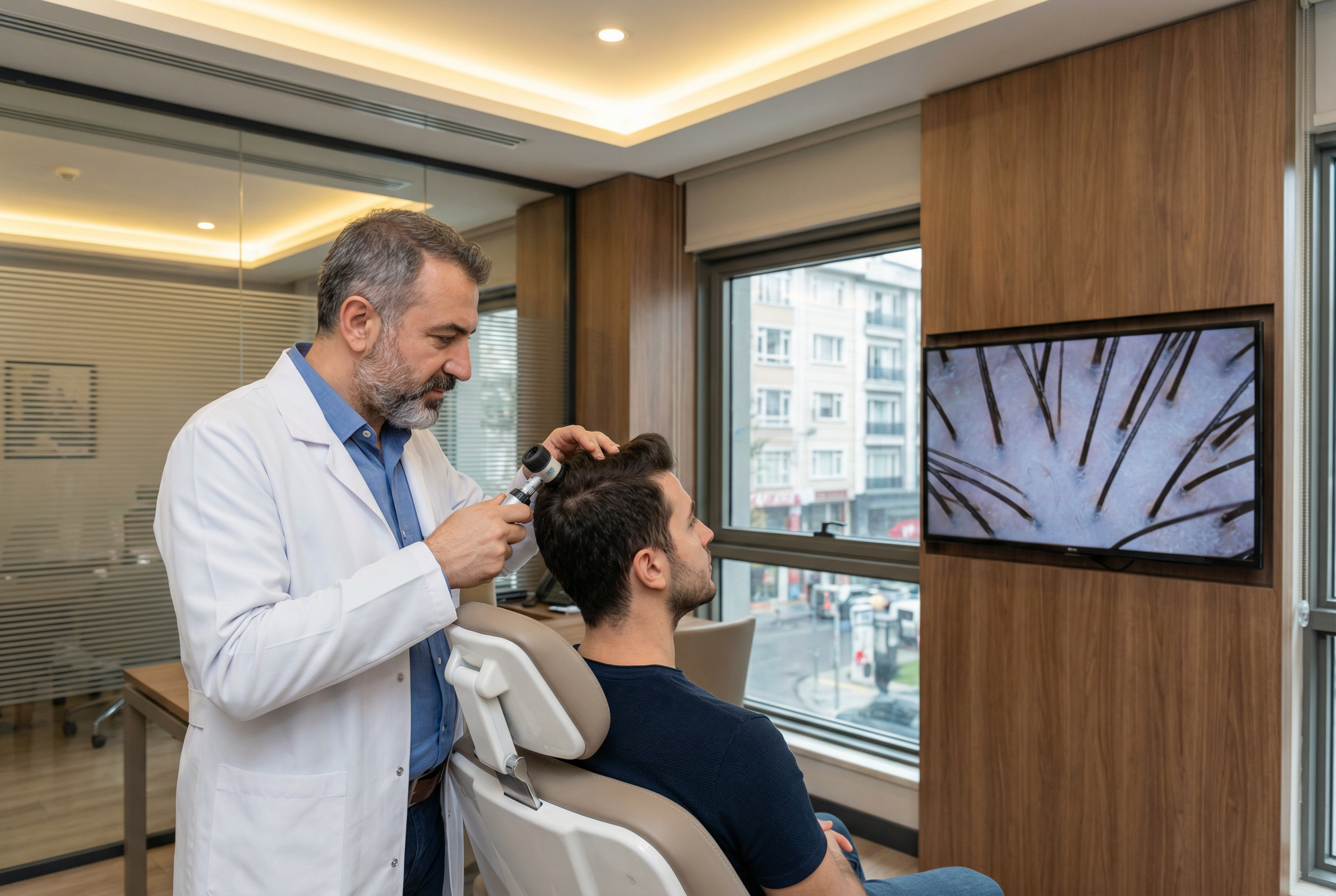 After consulting with numerous hair transplant surgeons in Turkey, a clear consensus emerges: the skill and artistry of the surgeon are far more important than the specific technique used. An exceptional surgeon using FUE will undoubtedly produce superior results to a less experienced one using DHI. Some of the most reputable clinics will assess your individual needs, hair type, and hair loss pattern before recommending an approach. Be cautious of clinics that exclusively advocate for one technique, as this may reflect their own limitations rather than your best interest.
 The most critical factors for a successful outcome include:
1. Artistic Hairline Design: The ability to create a natural, age-appropriate hairline that complements your facial features.
2. Proper Graft Handling: Ensuring grafts are kept hydrated and are implanted swiftly to maximize their survival rate.
3. Correct Angle and Direction: Implanting grafts at the precise angle and direction of natural hair growth for a seamless result.
4. Strategic Density Planning: Distributing grafts effectively to create the illusion of fullness while preserving the donor area for potential future needs.
5. Comprehensive Aftercare: Providing detailed post-operative instructions and follow-up to ensure proper healing and growth. Many patients find our
The most critical factors for a successful outcome include:
1. Artistic Hairline Design: The ability to create a natural, age-appropriate hairline that complements your facial features.
2. Proper Graft Handling: Ensuring grafts are kept hydrated and are implanted swiftly to maximize their survival rate.
3. Correct Angle and Direction: Implanting grafts at the precise angle and direction of natural hair growth for a seamless result.
4. Strategic Density Planning: Distributing grafts effectively to create the illusion of fullness while preserving the donor area for potential future needs.
5. Comprehensive Aftercare: Providing detailed post-operative instructions and follow-up to ensure proper healing and growth. Many patients find our