Loading...
Back to Procedure Guide
The Norwood Scale
Understanding the 7 stages of male pattern baldness — and what each means for your hair restoration options.
Understanding Hair Loss
What Is the Norwood Scale?
The Norwood Scale, also known as the Hamilton-Norwood Scale, is the most widely used classification system for measuring the extent of male pattern baldness. It provides a standardized framework that allows doctors and patients to communicate clearly about hair loss progression.
The scale outlines seven distinct stages, starting from a full head of hair with minimal recession to extensive baldness covering most of the scalp. Understanding your position on the Norwood scale is a critical first step in your hair restoration journey.
It offers a clear benchmark that helps specialists determine the potential number of grafts you might need, the most suitable surgical technique, and whether you are a strong candidate for a procedure. By identifying your stage, you can have a more informed discussion with a hair loss expert about your goals and the best path forward.
Stage by Stage
The 7 Norwood Stages Explained
Each stage represents a different degree of hair loss, providing a roadmap for diagnosis and treatment planning.

1
Norwood 1
No Significant Hair Loss
Estimated GraftsNone needed
Monitoring only
This stage represents no significant hair loss or hairline recession. The hairline is typically full and has not begun to recede at the temples. No treatment is generally necessary at this point.
2
Norwood 2
Slight Recession at Temples
Estimated Grafts800 to 1,500
Optional — preventative measures
A slight recession of the hairline at the temples becomes noticeable, often creating a subtle 'M' shape. Many refer to this as a mature hairline rather than the beginning of baldness. Treatment is optional, though some individuals choose to address it early with preventative measures or minor procedures.
3
Norwood 3
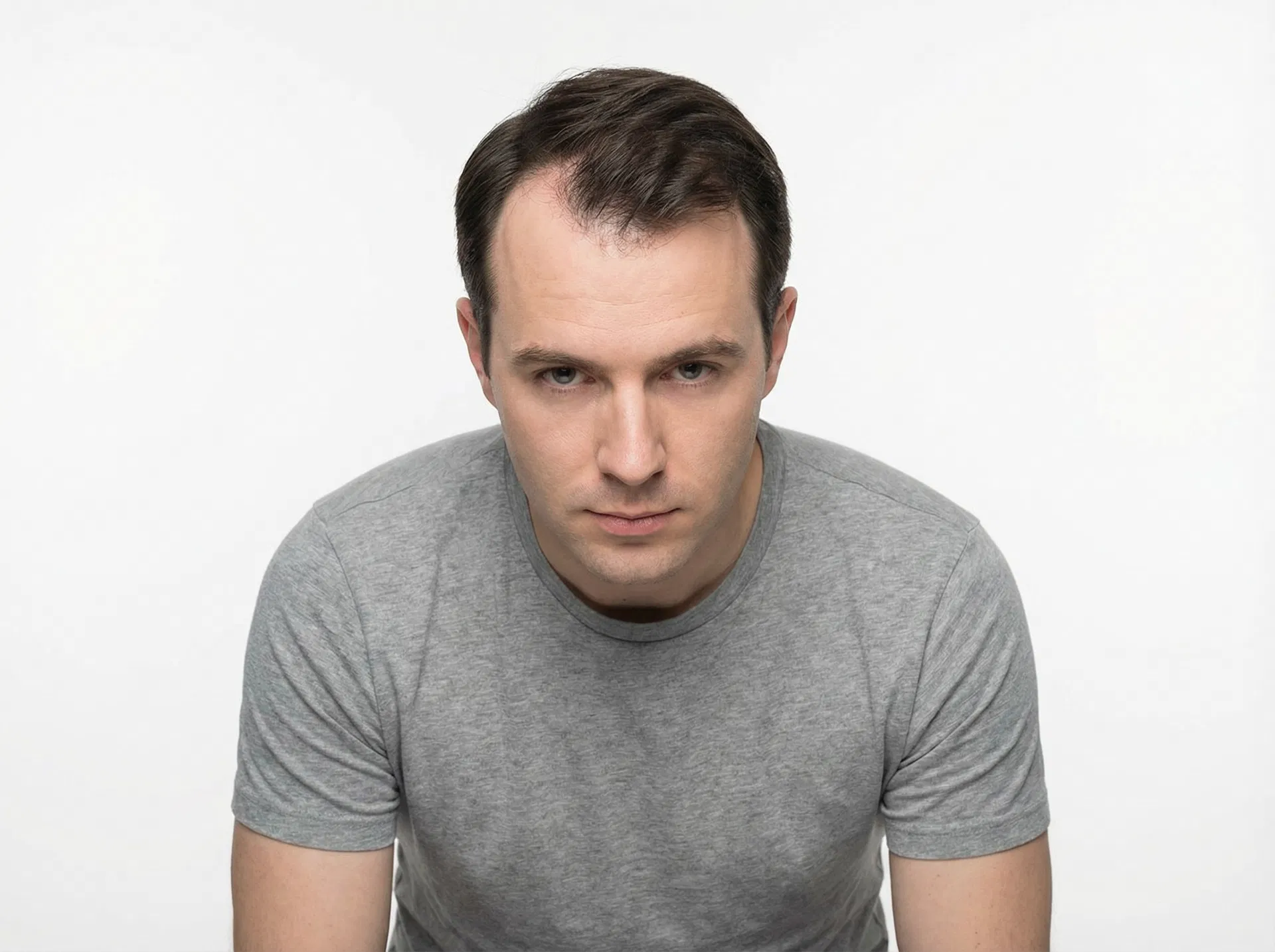
Pronounced Temple Recession
Estimated Grafts1,500 to 2,500
Hair transplant worth considering
The recession at the temples becomes much more pronounced, and the 'M' shape is clearly defined. This is often the earliest stage where Canadian men actively consider a Turkish hair transplant, as the hair loss becomes more obvious. A procedure at this stage typically requires 1,500 to 2,500 grafts.
3V
Norwood 3 Vertex
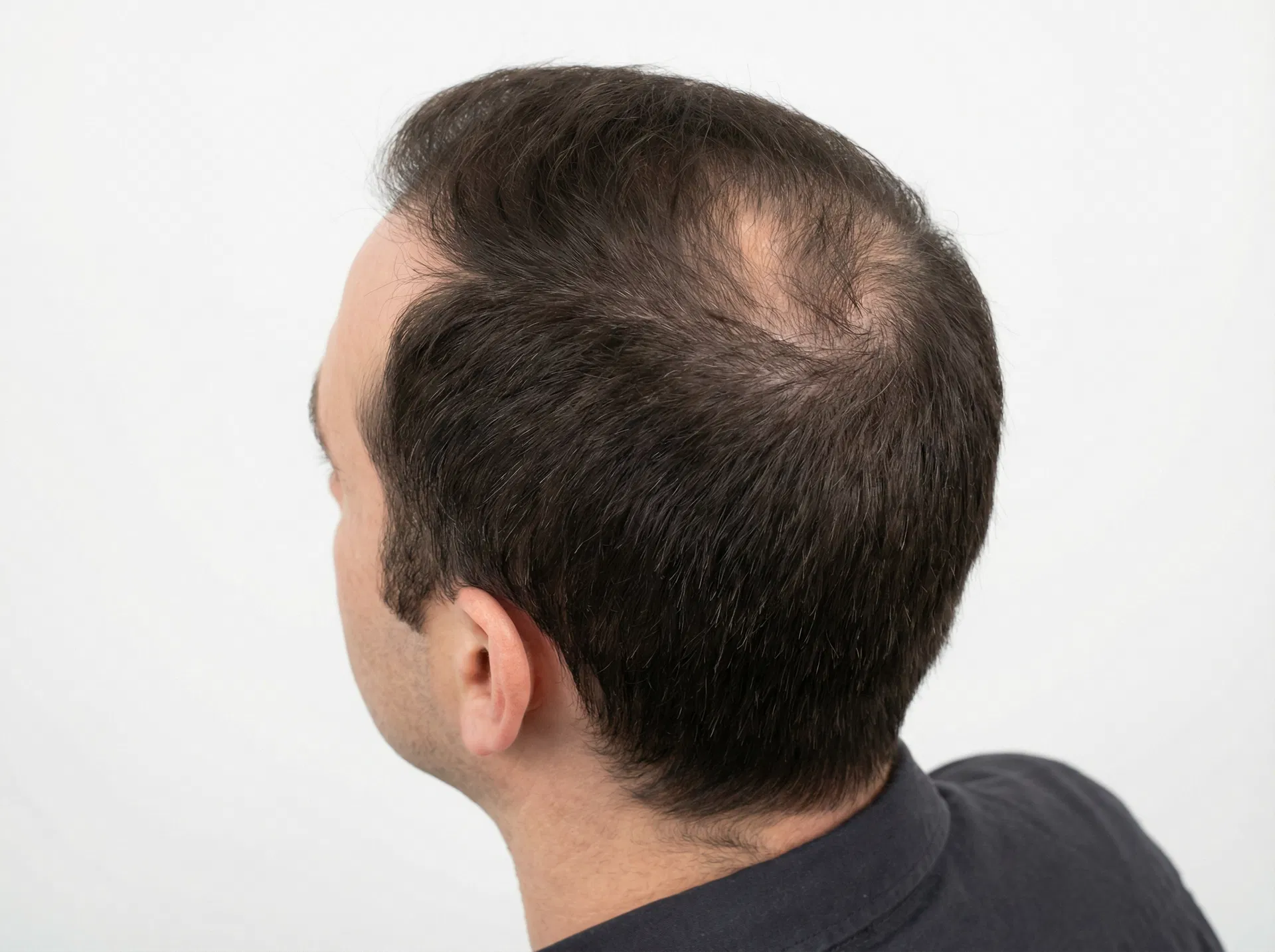
Temple Recession + Crown Thinning
Estimated Grafts2,000 to 3,500
Hair transplant suggested
In addition to the temple recession seen in Norwood 3, there is also noticeable thinning at the crown (the vertex). This stage requires attention to two separate areas, which increases the overall graft count needed for comprehensive coverage.
4
Norwood 4
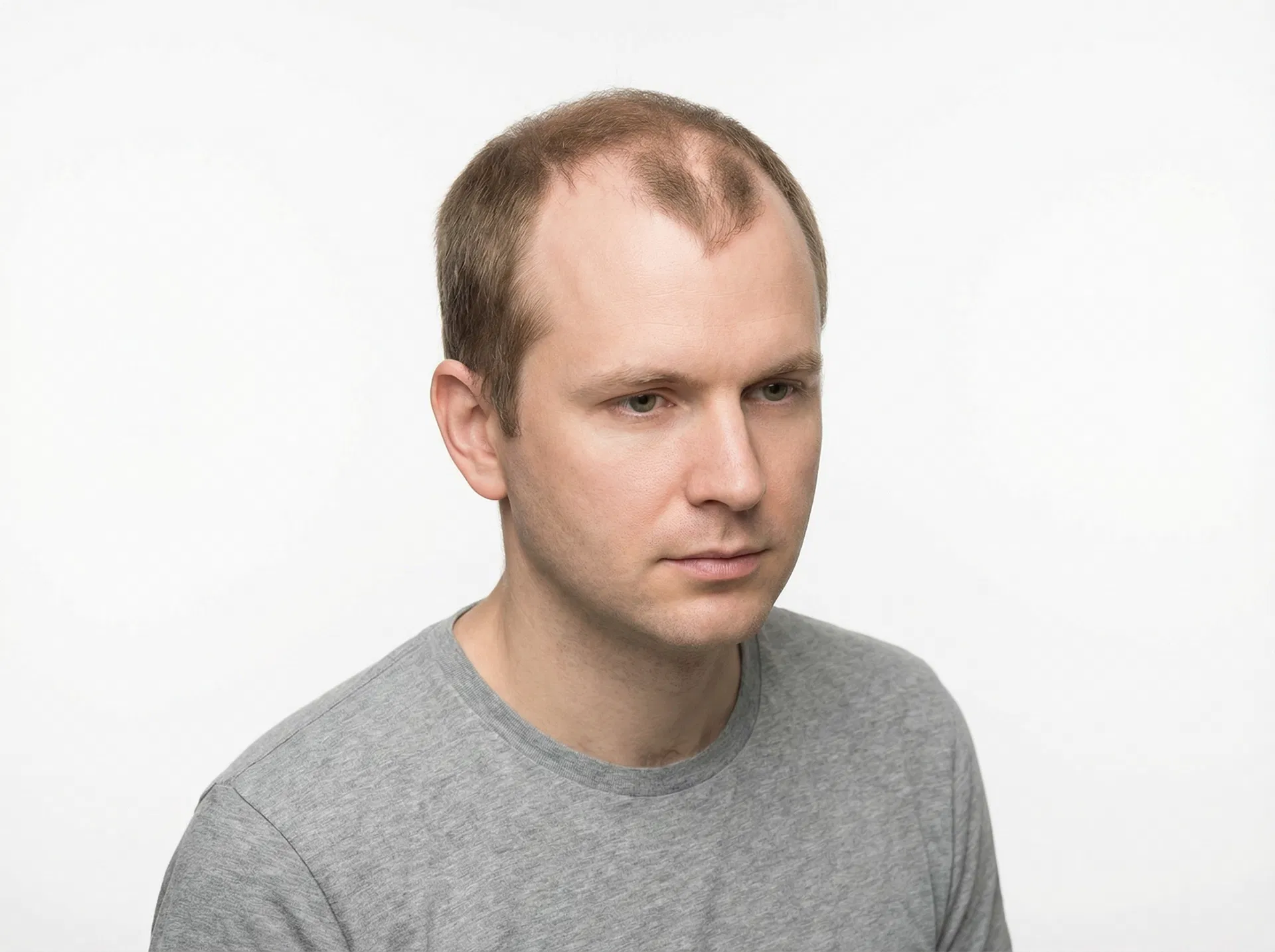
Significant Frontal & Crown Loss
Estimated Grafts3,000 to 4,000
Hair transplant strongly suggested
Hair loss is more severe, with significant recession at the front and a larger thinning or bald spot at the crown. A solid band of hair still separates the two areas of loss. A transplant could require 3,000 to 4,000 grafts to restore natural-looking coverage.
5
Norwood 5
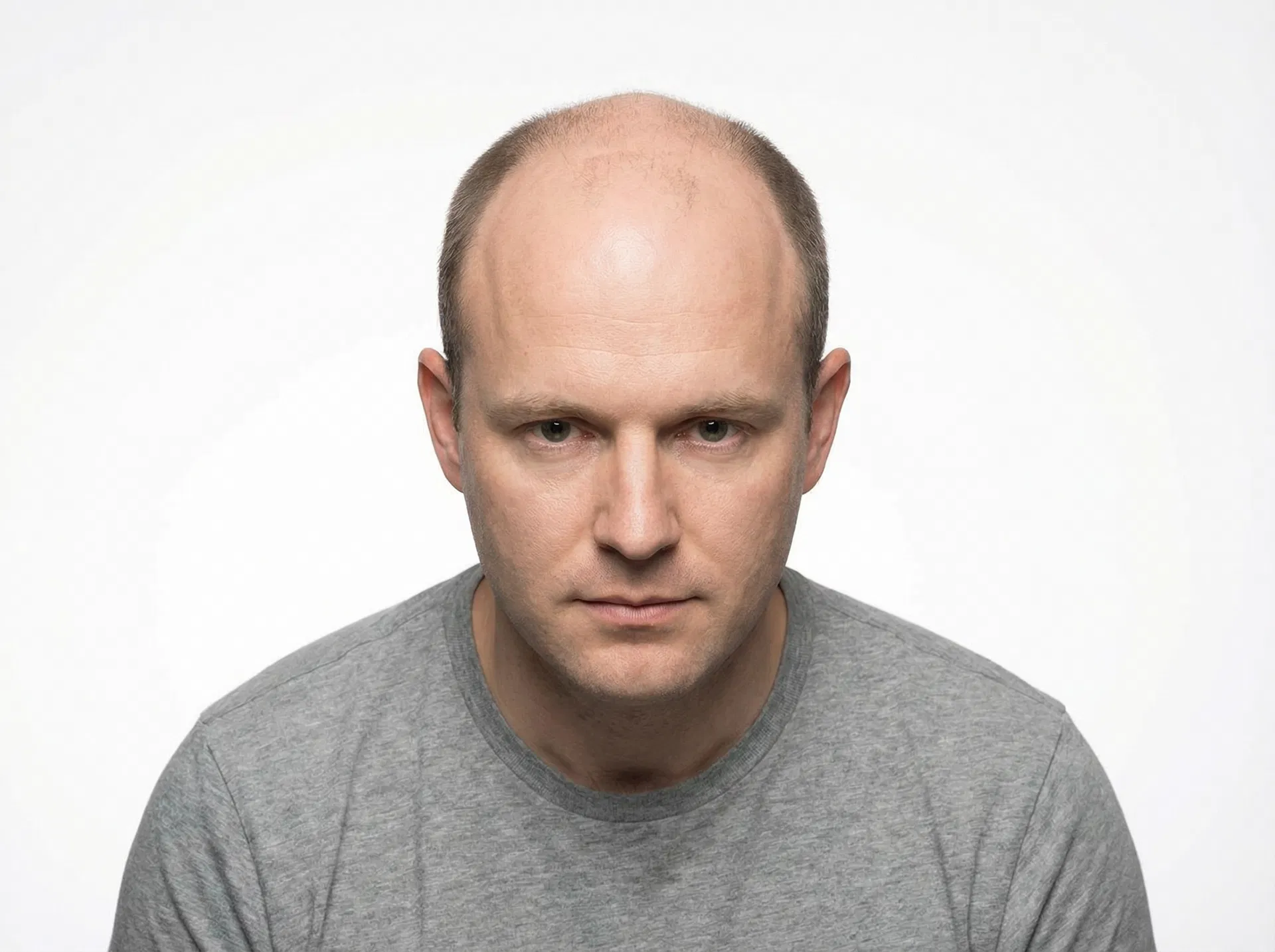
Merging Frontal & Crown Loss
Estimated Grafts3,500 to 5,000
Extensive transplant — may need 2 sessions
The areas of hair loss at the front and crown are larger and the band of hair separating them becomes narrower and thinner. More extensive coverage is needed, often requiring 3,500 to 5,000 grafts, which might be done over two separate sessions for optimal results.
6
Norwood 6
Large Bald Area — Horseshoe Pattern
Estimated Grafts4,000 to 6,000+
Complex transplant — requires 2 sessions
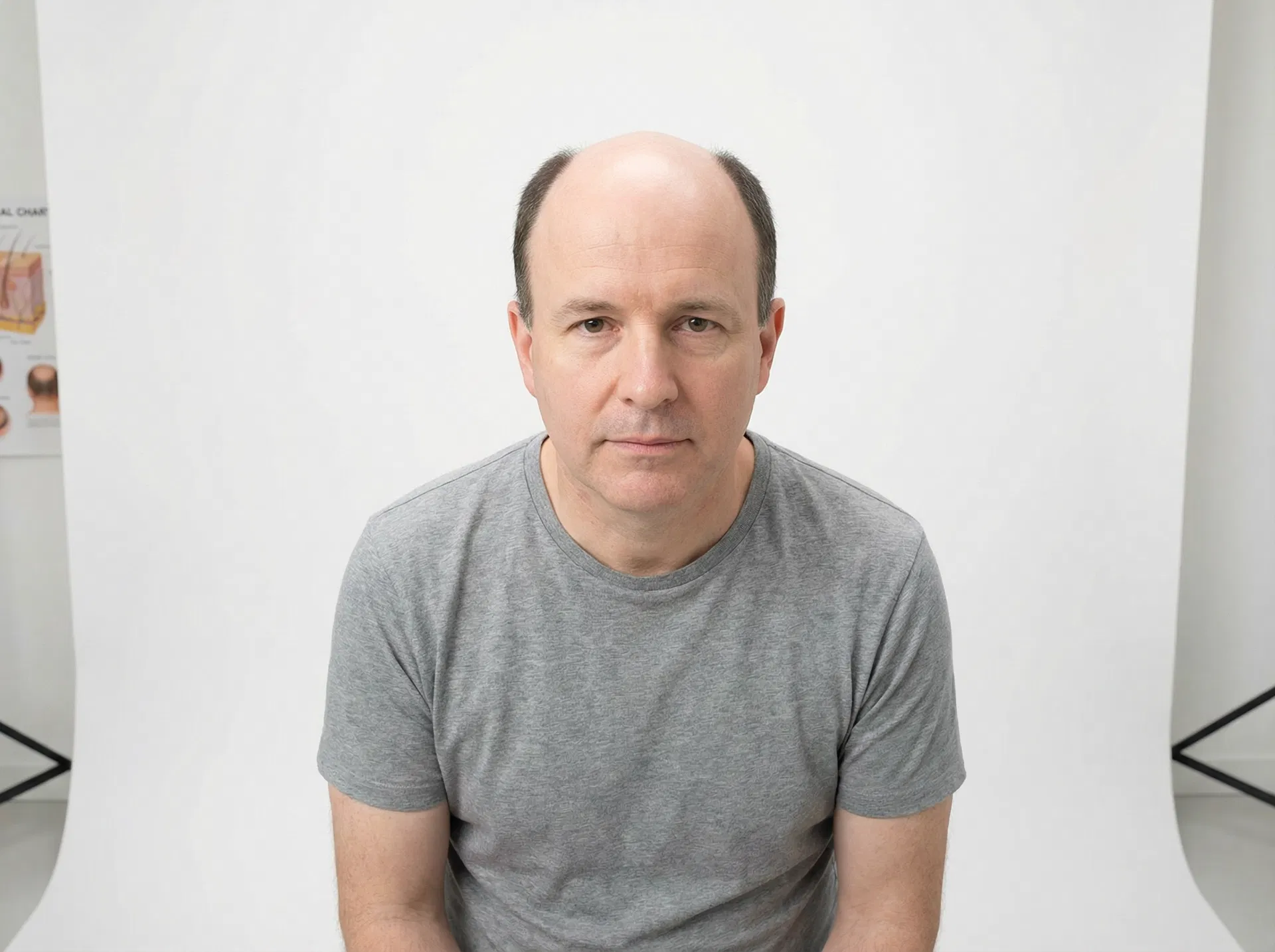
The bridge of hair separating the frontal and crown areas is now gone, creating one large bald area. A horseshoe pattern of hair remains along the sides and back of the head. A procedure at this stage is complex and could require 4,000 to over 6,000 grafts, almost always split into two sessions.
7
Norwood 7
Most Advanced Hair Loss
Estimated Grafts5,000 to 7,000+
Multiple sessions required — limited donor
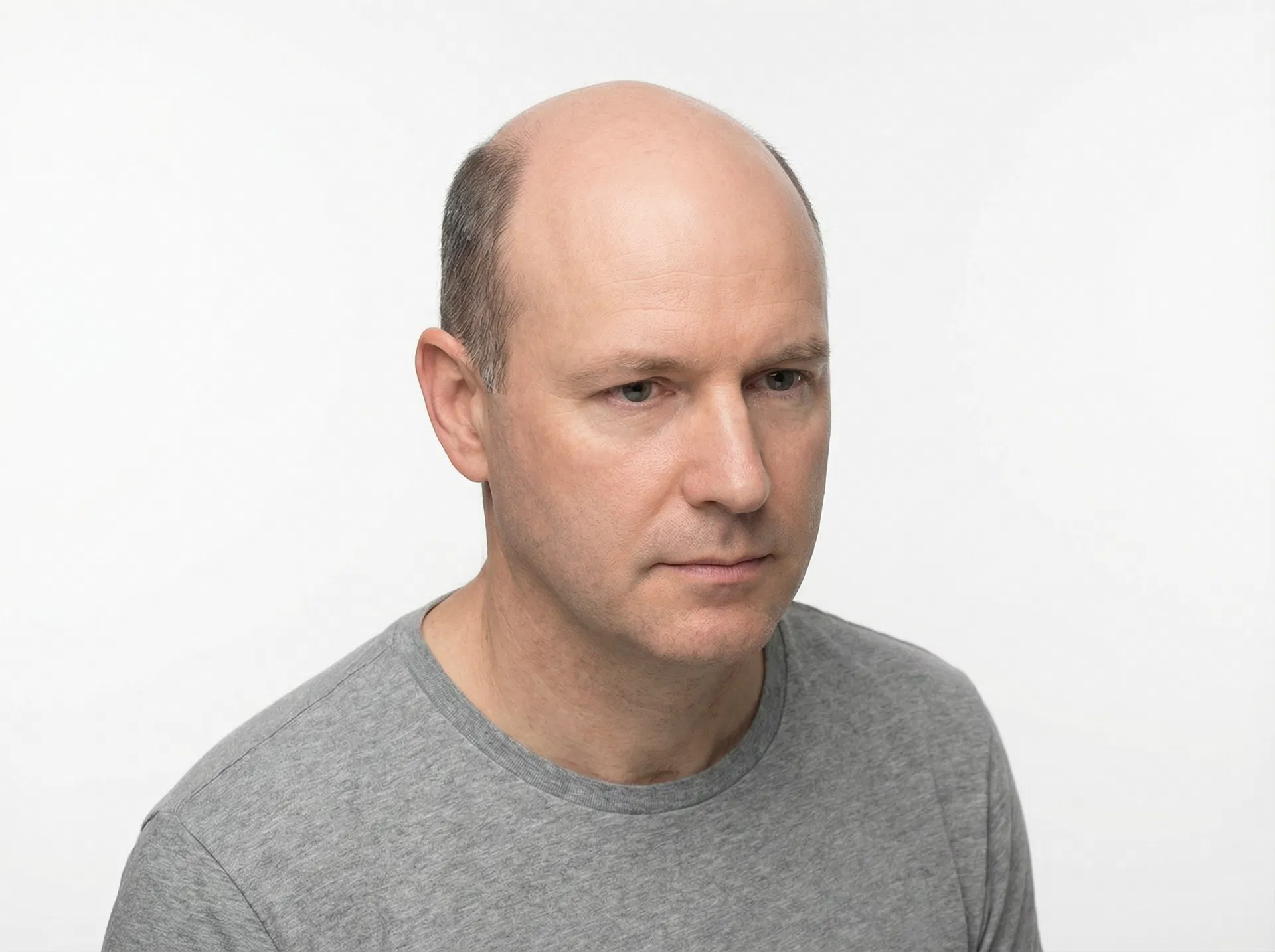
This is the most advanced stage of hair loss. Only a narrow band of hair remains around the back and sides of the scalp. The donor hair available is limited, and a transplant may require 5,000 to over 7,000 grafts spread across multiple procedures to achieve even partial coverage.
Treatment Planning
Estimated Graft Requirements
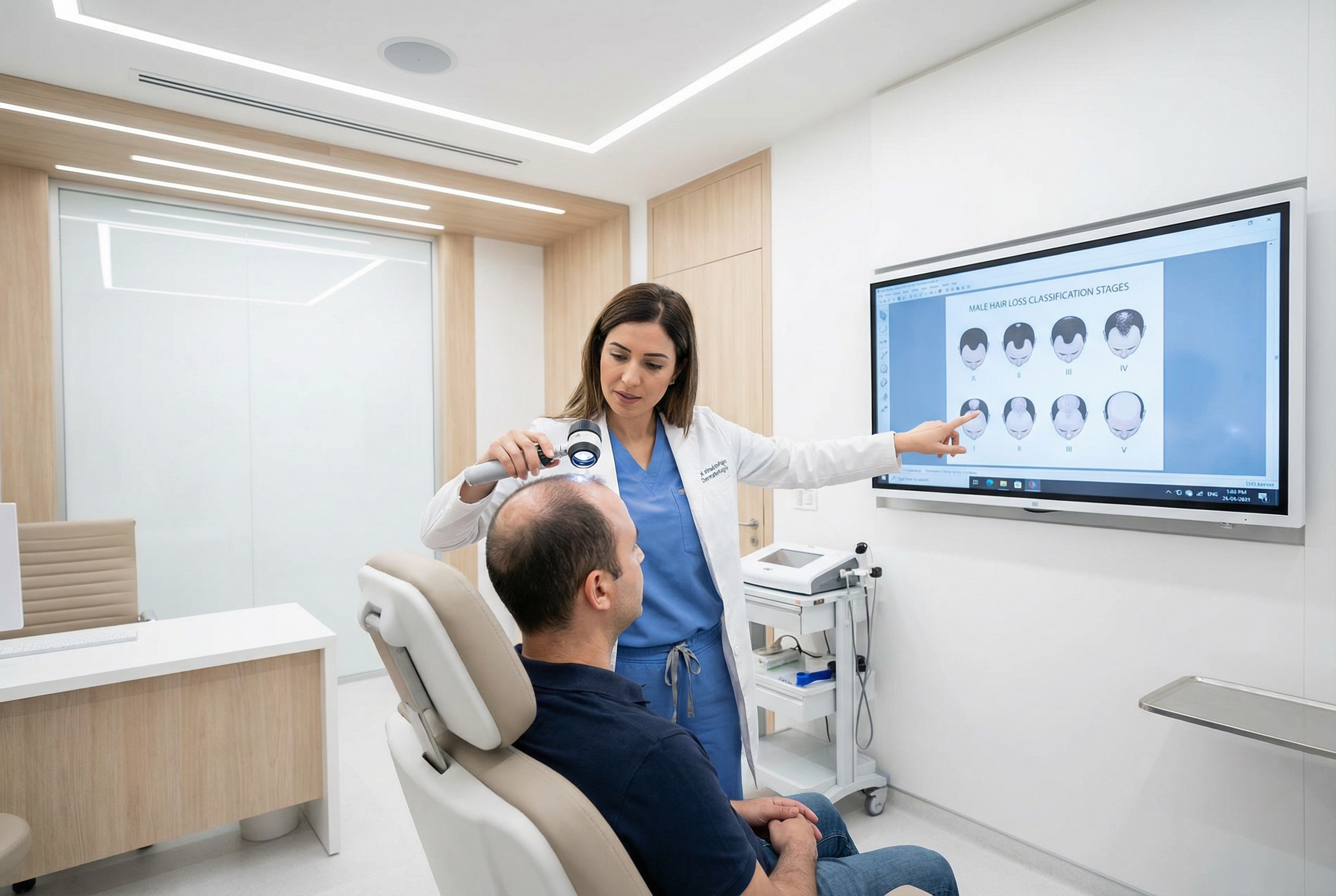
While these numbers are general estimates, they provide a useful starting point for understanding what a procedure might entail. A formal consultation with a qualified specialist is the only way to get a precise graft count tailored to your specific needs.
| Stage | Grafts Needed |
|---|---|
| Norwood 2 | 800 to 1,500 |
| Norwood 3 | 1,500 to 2,500 |
| Norwood 3V | 2,000 to 3,500 |
| Norwood 4 | 3,000 to 4,000 |
| Norwood 5 | 3,500 to 5,000 |
| Norwood 6 | 4,000 to 6,000+ |
| Norwood 7 | 5,000 to 7,000+ |
A surgeon will also carefully evaluate your donor area capacity, hair thickness, texture, and the anticipated progression of your hair loss to create a comprehensive, long-term plan.
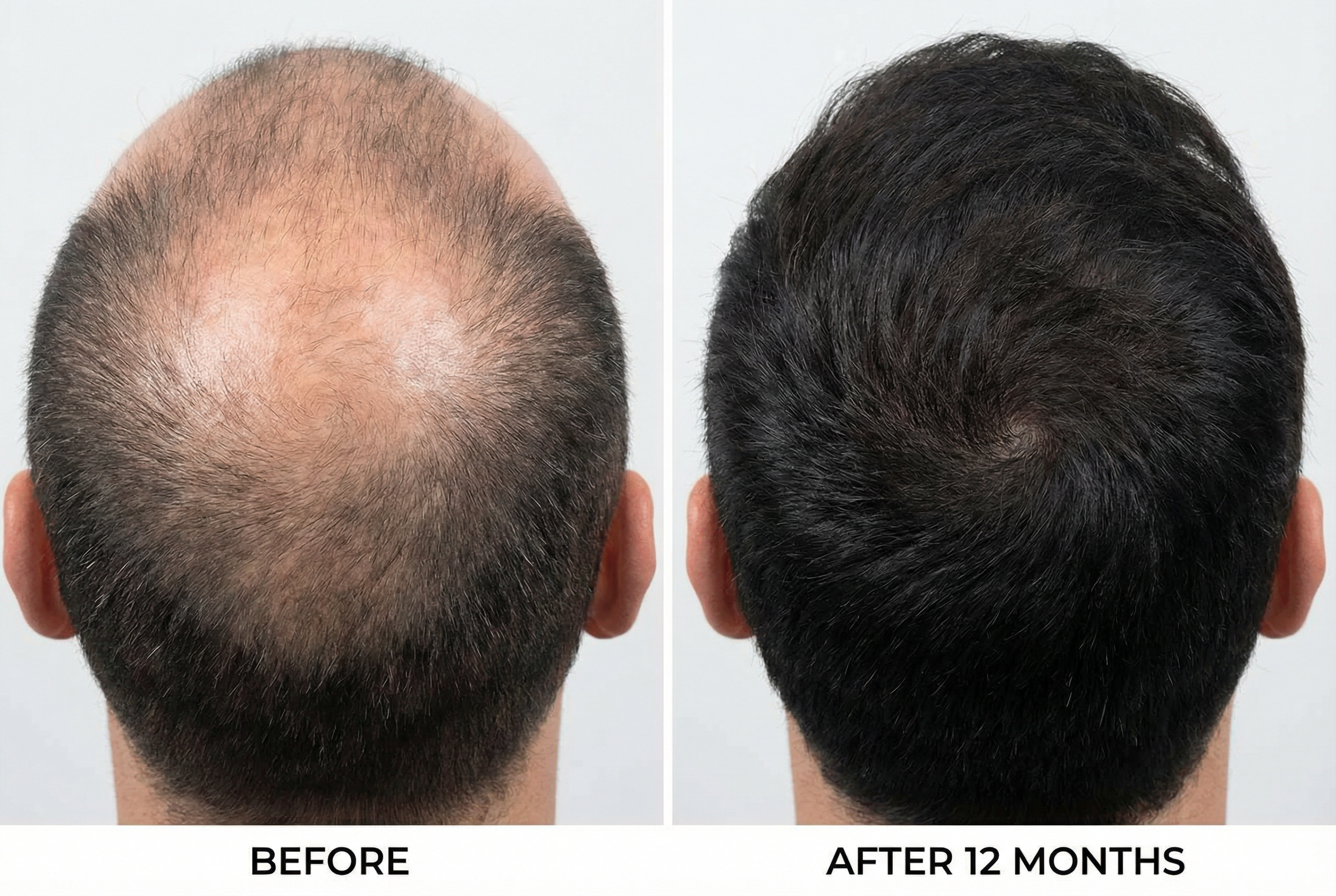
Think it might be time to consider a hair transplant? Contact us now for a FREE consultation!

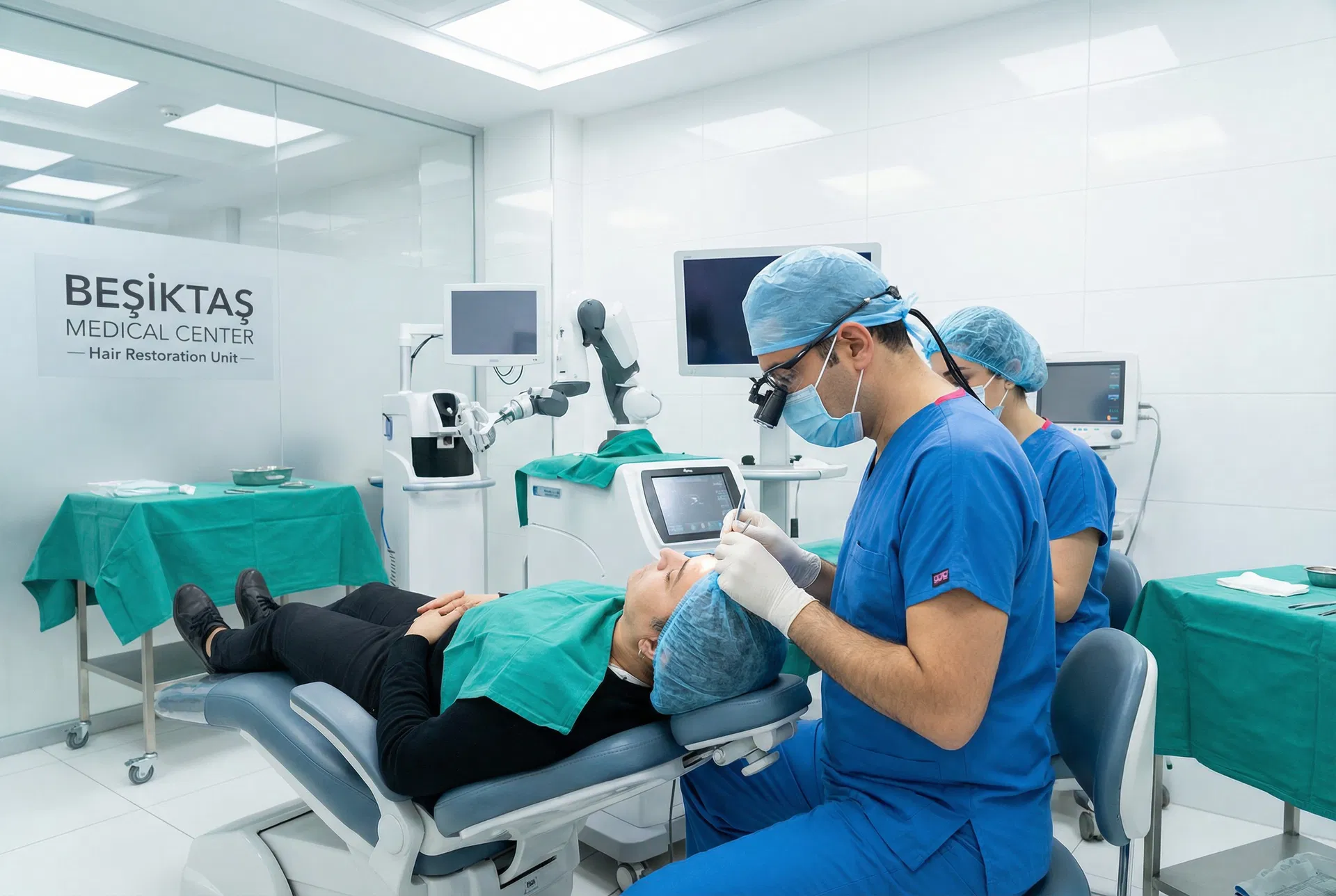
A qualified surgeon will create a personalised treatment plan based on your specific Norwood stage, donor area density, and long-term goals.
Making the Decision
When Is the Right Time?
Age
Most reputable surgeons advise waiting until at least 25 to 30 years of age. By this time, hair loss patterns tend to stabilize, allowing the surgeon to design a transplant that will look natural for years to come.
Stability of Hair Loss
It is crucial that your hair loss is not rapidly progressing. If your hair is shedding quickly, clinics may recommend medical treatments like finasteride or minoxidil to stabilize the loss before considering surgery.
Realistic Expectations
A hair transplant redistributes your existing hair from a dense donor area to thinning or bald areas — it does not create new hair. Individuals with extensive baldness and limited donor hair must have realistic expectations.
Ideal Candidates
Generally, the best candidates are individuals between Norwood 3 and 5, aged 28 to 55, with stable hair loss and a healthy, dense donor area. Patients in this group often experience the most dramatic transformations.
Not Sure What Stage You're At?
Get a free assessment from one of Turkey's top clinics. Our team can help you determine your Norwood stage and understand your options.
Get My Free Assessment