The initial price advertised is tantalizingly low, drawing you in and making you feel like you’ve found an incredible deal. However, this is often just the base price, and once you have committed and arrived in Turkey, a series of additional, mandatory charges are piled on. These can include separate fees for anaesthesia, post-operative medications, PRP (Platelet-Rich Plasma) treatments, the aftercare kit, hotel upgrades, or even basic blood tests. The final cost can end up being double the advertised price.
How to avoid it: Transparency is non-negotiable. Before booking or paying any deposit, demand a detailed, itemized quote in writing that clearly lists everything included in the package. Then, ask the crucial follow-up question: 'What is specifically NOT included in this price?' This forces the clinic to disclose any potential extra charges. When comparing clinics, always compare the total, all-inclusive package costs, not just the headline price. You can find more information on what to expect in our
cost guide.
Reach out for a free, trustworthy recommendation.

 First, it is crucial to understand that the vast majority of hair transplant clinics in Turkey are legitimate, highly professional, and staffed by skilled medical teams. The country has rightfully earned its reputation as a global leader in hair restoration, delivering exceptional quality at prices that are significantly more accessible than in many Western countries. The sheer volume of successful procedures performed annually is a testament to the expertise available. However, this booming industry has unfortunately attracted a small number of dishonest operators looking to profit from unsuspecting patients.
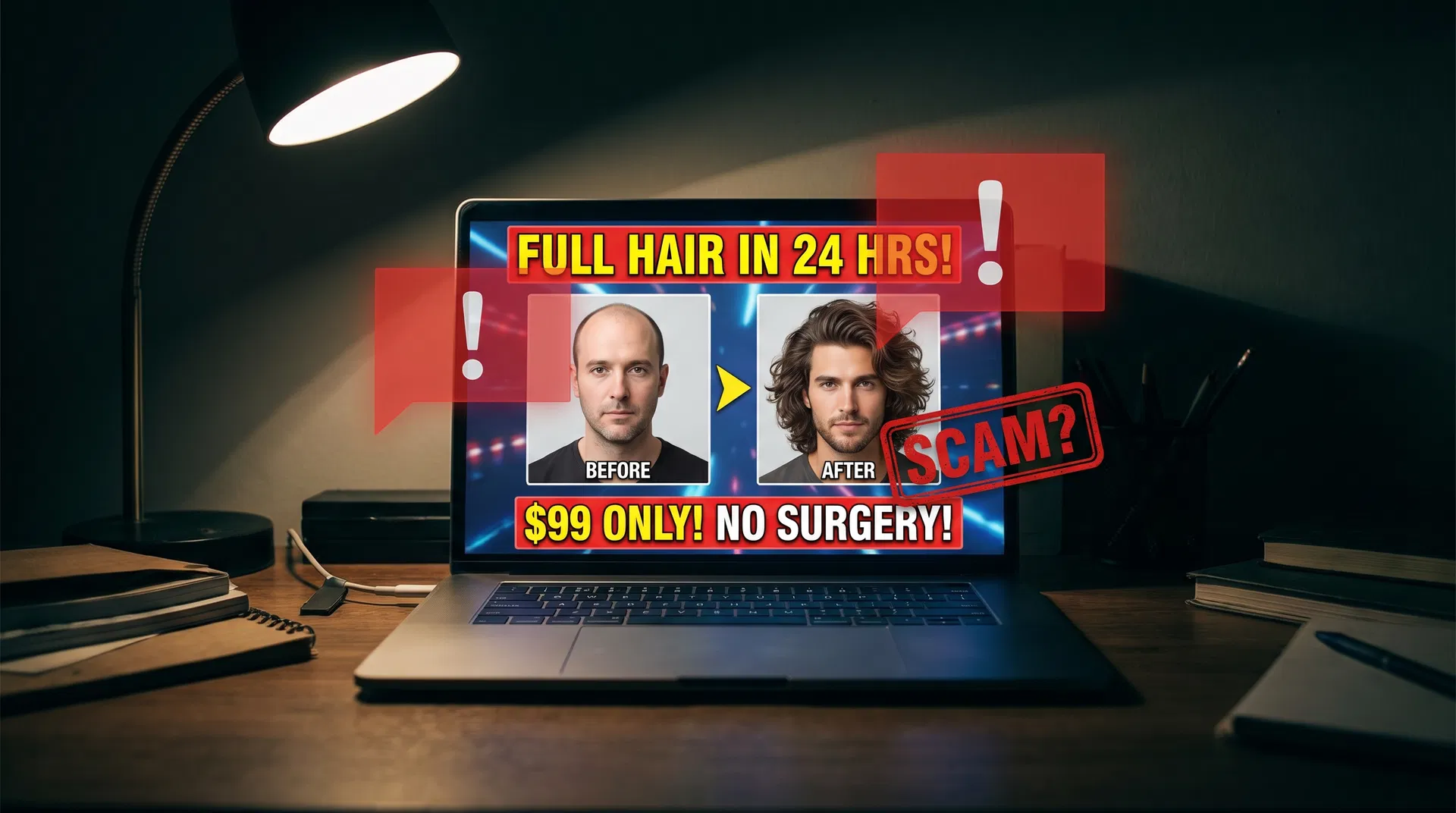 This guide is not meant to discourage you from considering Turkey for your procedure, but rather to empower you with the knowledge to distinguish reputable clinics from the few bad actors and make an informed, safe choice.
 How to avoid it: Diligence is key. Before paying a deposit, request a written contract that explicitly guarantees the named surgeon will perform the entire procedure, or at least the most critical parts (extraction and implantation). Ask for a live video consultation with the specific surgeon who will be operating on you. Furthermore, you can verify their credentials by checking if the surgeon is listed on the official Turkish Medical Association registry. A reputable clinic will be transparent about who performs each step of the process.
 How to avoid it: Always verify the clinic’s physical address using Google Maps and Street View. Cross-reference this with their official registration details. Reputable clinics are licensed by the Turkish Ministry of Health (Sağlık Bakanlığı) and are proud to show off their facilities. Look for numerous photos and videos of the actual clinic interior and operating rooms, not just generic stock images. Ask for the clinic's official registration number and verify it. A legitimate clinic will have a clear physical footprint and a transparent legal status.
 How to avoid it: Inquire directly about the clinic's daily patient load. Ask: 'How many hair transplant procedures does the lead surgeon personally perform or directly supervise each day?' A quality-focused clinic will typically schedule only one or two patients per surgeon per day. More than three is a significant red flag. Ask for clarification on the surgeon's direct role: will they be performing the extraction and implantation themselves, or just supervising? The answer will reveal their commitment to quality control.