Loading...
Patient Guide
Your Essential Guide to
Hair Transplant Aftercare
Everything you need to do after your procedure to maximise results — from washing to sleeping to exercise.
CRITICAL WINDOW
The First 48 Hours
The initial 48 hours are paramount for graft survival. This period sets the foundation for your entire recovery and the eventual aesthetic result.
Sleep Elevated
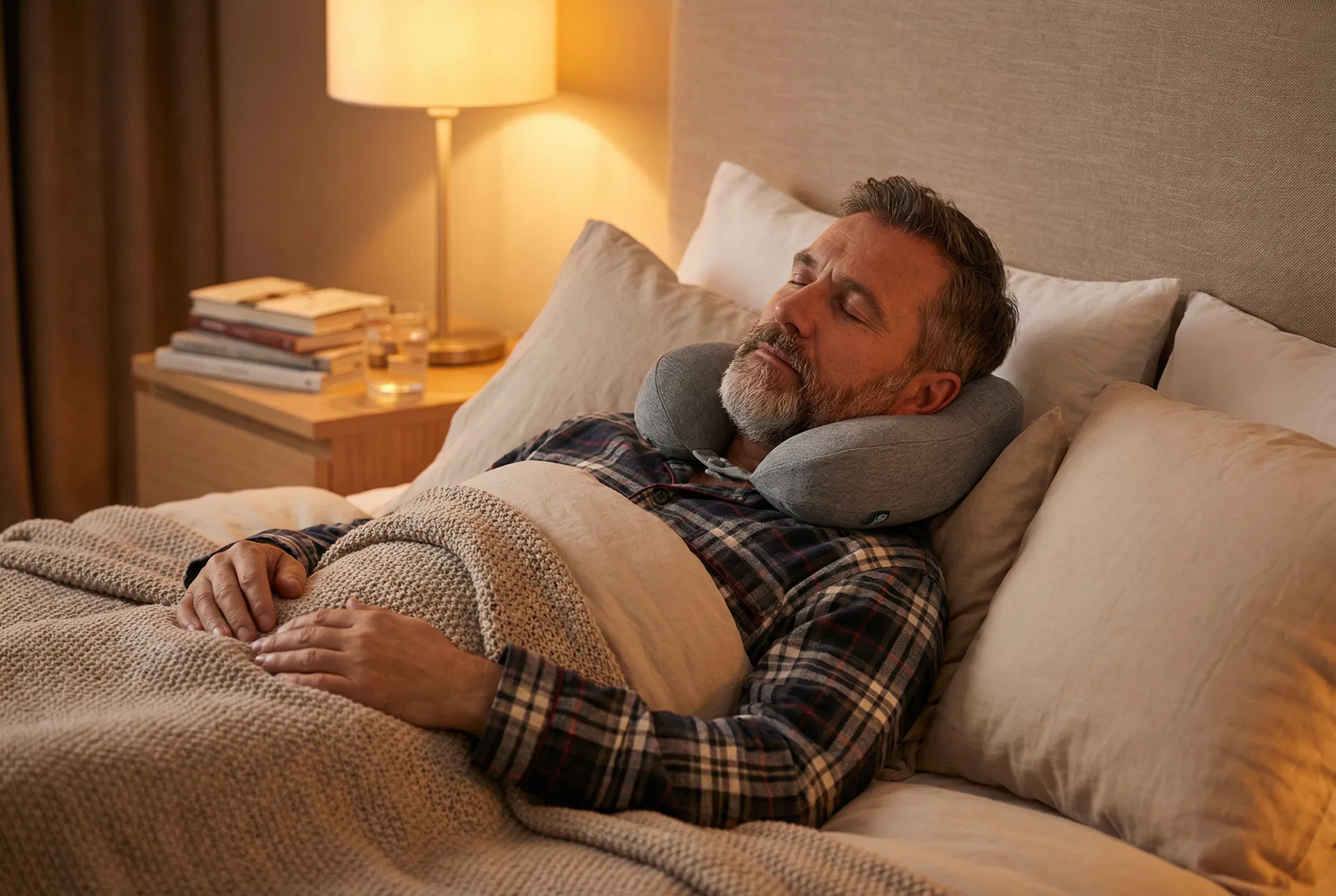
Keep your head at a 45-degree angle using stacked pillows or a recliner. A travel neck pillow prevents rolling onto your side. This minimizes swelling and protects the grafts from pressure.
Take All Medications
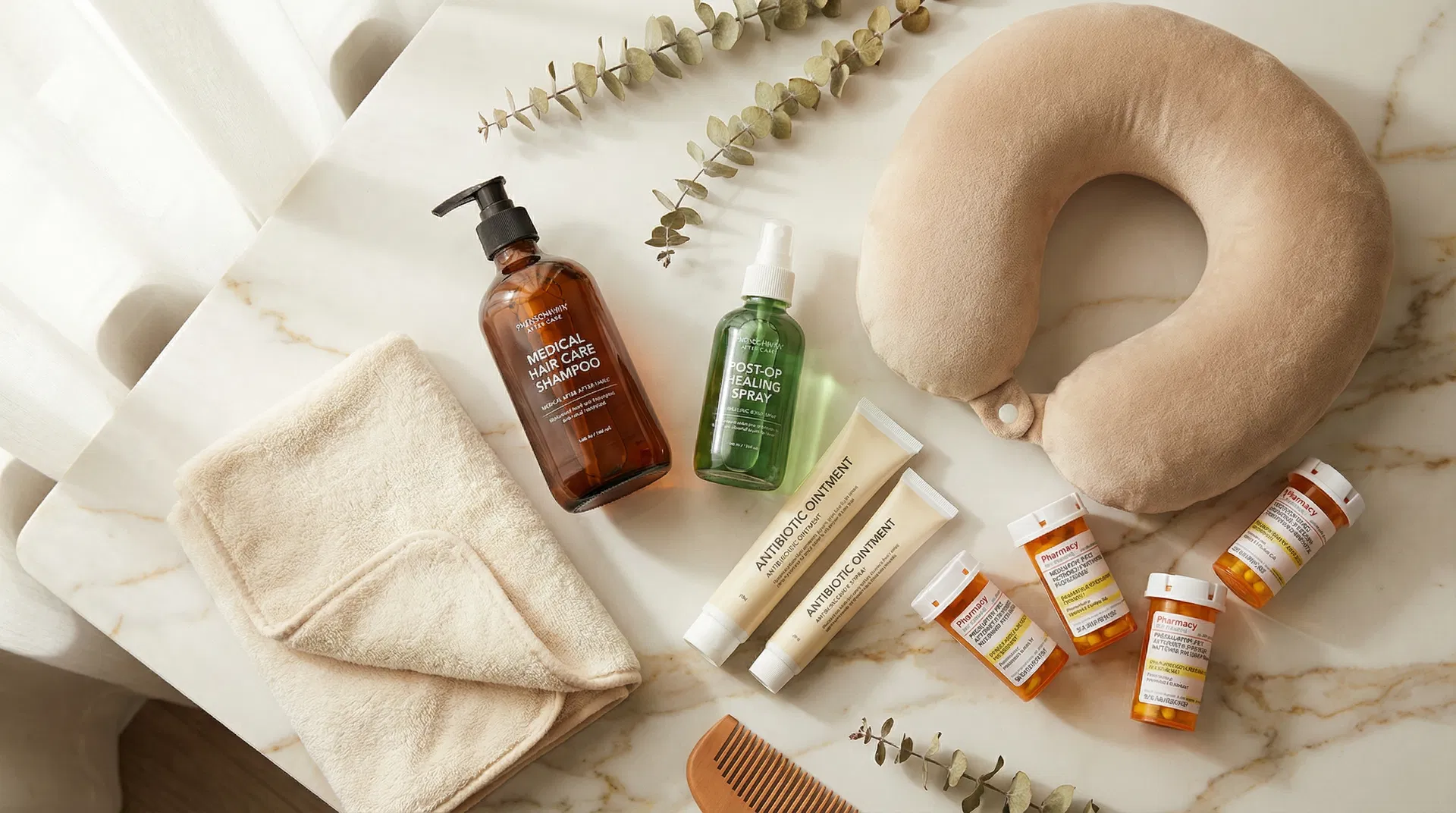
Follow your prescribed regimen exactly: antibiotics to prevent infection, anti-inflammatories for swelling, and pain medication as needed. Set phone alarms so you never miss a dose.
Stay Hydrated
Drink 2 to 3 litres of water daily to help your body heal and reduce swelling. Avoid alcohol entirely for at least 5 days — it thins the blood and increases swelling.
Rest Completely
Avoid bending over, heavy lifting, or any strenuous activity. Short gentle walks are fine, but your main focus should be recovery. Avoid anything that raises blood pressure to your scalp.
Don't Touch the Grafts
Do not touch, rub, or scratch the transplanted area under any circumstances. Avoid tight hats, helmets, or beanies. Smoking is strictly forbidden as it constricts blood vessels.
Avoid Sun Exposure
The scalp is extremely sensitive after the procedure. Stay out of direct sunlight. If you must go outside, wear a very loose-fitting hat that allows air circulation.
WASHING PROTOCOLHair Washing:
Hair Washing:
A Gentle Approach
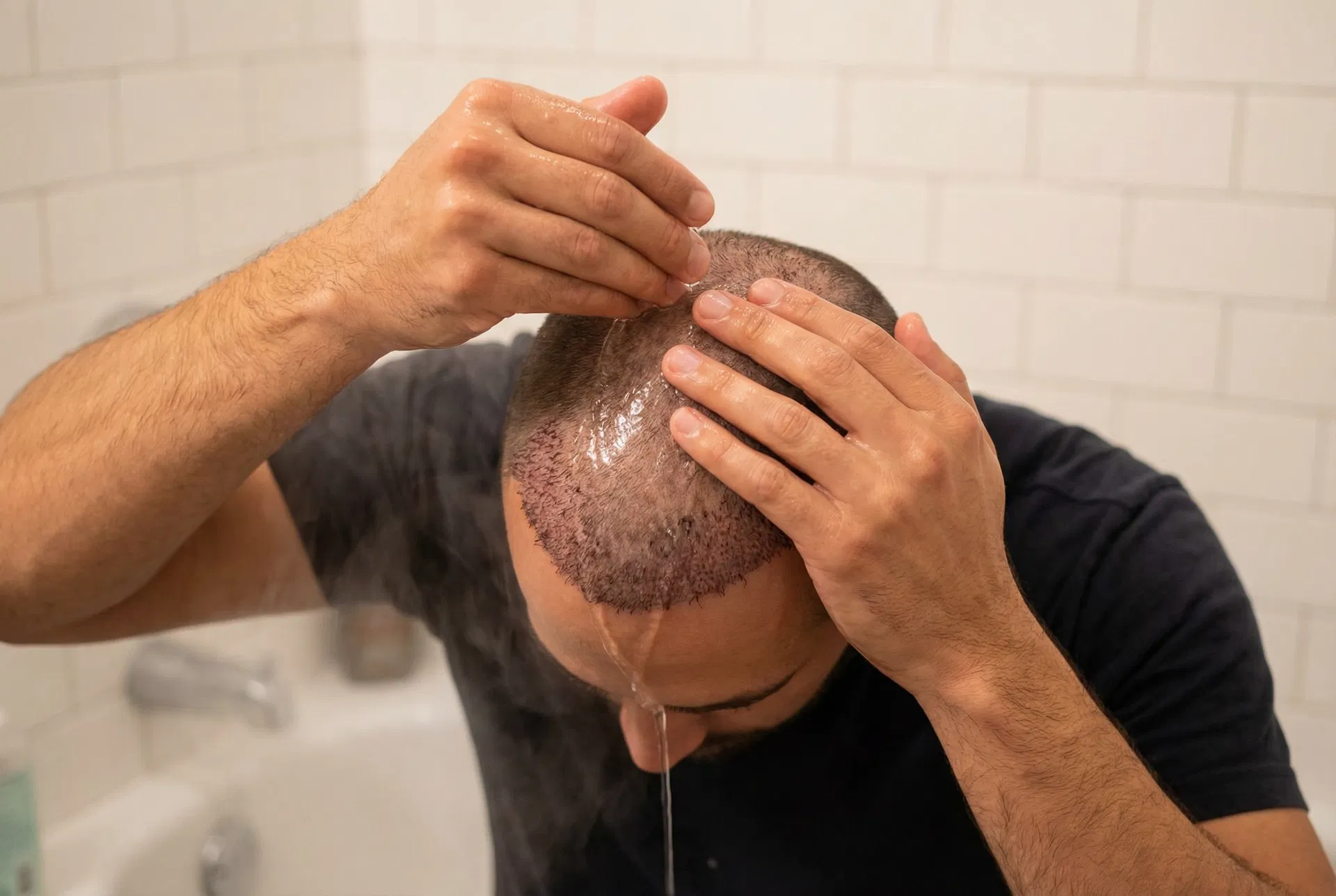
Properly washing your hair and scalp is critical for keeping the area clean, preventing infection, and helping scabs heal naturally. Your first wash will be performed at the clinic by a trained nurse who will demonstrate the correct technique.
After Day 30
You can resume your normal washing routine. A gentle, sulphate-free shampoo is always a good choice for long-term scalp health.
Days 3 to 14 — Daily Routine
1
Apply Lotion
Gently apply the special lotion or moisturizer provided by your clinic to the entire transplanted area. Do not rub. Let it sit for 15 to 30 minutes to soften the scabs that have formed around each graft.
2
Gentle Rinsing
Using a cup or bowl, gently pour lukewarm water over the area to rinse off the lotion. Do not use direct shower pressure on the grafts — the force can dislodge them.
3
Shampooing
Apply a small amount of the prescribed medical shampoo to your fingertips and gently pat it onto the grafts. No rubbing or circular motions — just light patting.
4
Final Rinse
Rinse the shampoo away using the same gentle cupping method with lukewarm water. Be patient and thorough but always gentle.
5
Drying
Pat the area dry with a very soft, clean towel. Do not rub. Let it air dry the rest of the way. After Day 14, you can begin gentle fingertip massage and introduce gentle shower pressure.
EXERCISE TIMELINE
Returning to Physical Activity
Returning too soon can compromise results by causing sweating, increasing blood pressure, or leading to impact on the grafts. Follow this structured timeline.
Week 1
Light walking only
Week 2
Gentle stretching, continued walking — no sweating
Week 3
Light cardio: stationary bike, brisk treadmill walk
Week 4
Moderate exercise, light weightlifting — no contact sports
Month 2
Full exercise routine, heavy weightlifting — still avoid head impact
Month 3+
All restrictions lifted — contact sports, swimming, everything
Learn more about the post hair transplant recovery timeline here.
IMPORTANT
Key Things to Avoid
Protecting your investment is key. Here are the activities and substances you must avoid during the initial recovery period.
Direct sunlight
First month
Pools, saunas, hot tubs
First month
Smoking & vaping
First month+
Alcohol
First week
Tight hats & helmets
First month
Hair dye & chemicals
First month
Picking scabs
Until they fall naturally
Hairdryer heat
First 3 months (cool only)
First Month
Critical recovery period
Sun Exposure
Avoid direct sunlight completely. Wear a very loose-fitting hat if you must go outside.
Water & Steam
Stay out of swimming pools, saunas, steam rooms, and hot tubs to prevent infection.
Smoking & Vaping
Both significantly reduce blood flow and oxygen supply, severely impacting graft survival.
Alcohol
Thins the blood, increasing bleeding and swelling risk. Avoid for at least the first week.
Headwear
Avoid tight hats, helmets, or beanies that could pressure or dislodge the grafts.
Hair Products
No hair dye, hairspray, or chemical treatments on your hair.
Picking Scabs
Let them fall off naturally during washing. Picking can pull out the graft underneath.
First 3 Months
Continued care period
High Heat
Always use the cool setting on your hairdryer. High heat can damage healing skin and new follicles.
Harsh Chemicals
Continue to use gentle, sulphate-free shampoos. Avoid any harsh chemical products on your scalp.
Sun Protection
Be diligent about protecting your scalp. Wear a hat or use high-SPF sunscreen designed for the scalp.
After 3 months, most restrictions are lifted!
You can resume normal activities including contact sports and swimming.
GROWTH SUPPORT
Supplements & Medications
Certain supplements and medications can enhance hair growth and maintain existing hair. Always discuss new supplements with your surgeon or family doctor before starting.
Biotin (B7)
5,000–10,000 mcg/day
Supports keratin infrastructure — the protein that makes up your hair. One of the most widely recommended post-transplant supplements.
Zinc
25–50 mg/day
Plays a vital role in hair tissue growth and repair. Don't exceed the recommended daily allowance without medical supervision.
Vitamin D
2,000–4,000 IU/day
Helps activate dormant hair follicles. Especially important for Canadians who may be deficient due to northern latitude and long winters.
Finasteride
1 mg/day (prescription)
Blocks DHT, the hormone responsible for male pattern baldness. Effective for preventing further loss but requires a doctor's discussion about potential side effects.
Minoxidil
5% topical solution
Supports existing hair and can accelerate transplanted hair growth. Wait at least 1 month before applying to non-transplanted areas, 3 months for the recipient area.
PRP Therapy
Every 3–6 months
Platelet-Rich Plasma injections stimulate healing and growth. Some clinics include a session in their package. Additional sessions can boost long-term results.
Want more info?
Get a free assessment from one of Turkey's top clinics. Our team can connect you with one or more excellent clinics for your needs and budget.
Get My Free Assessment