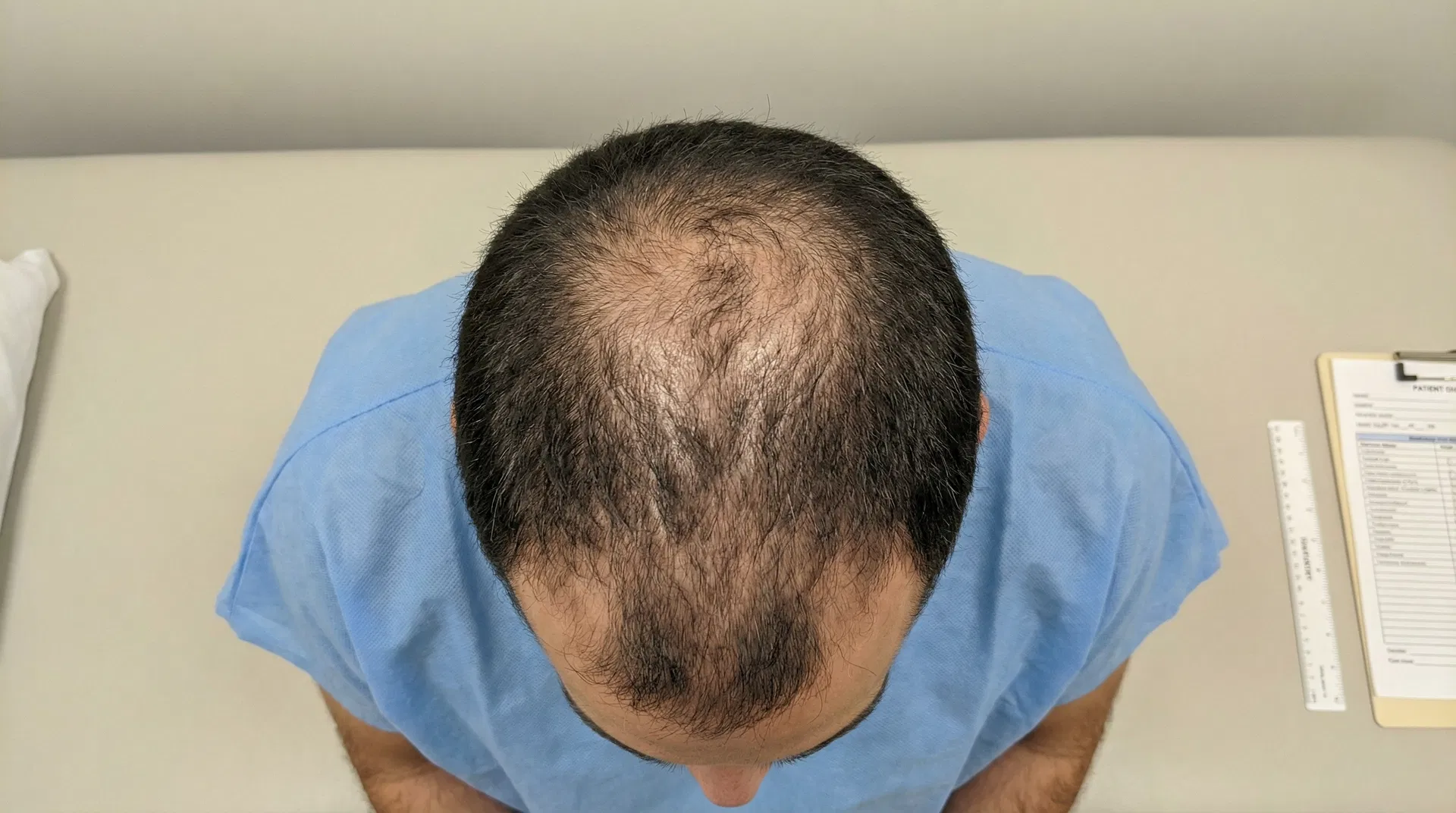
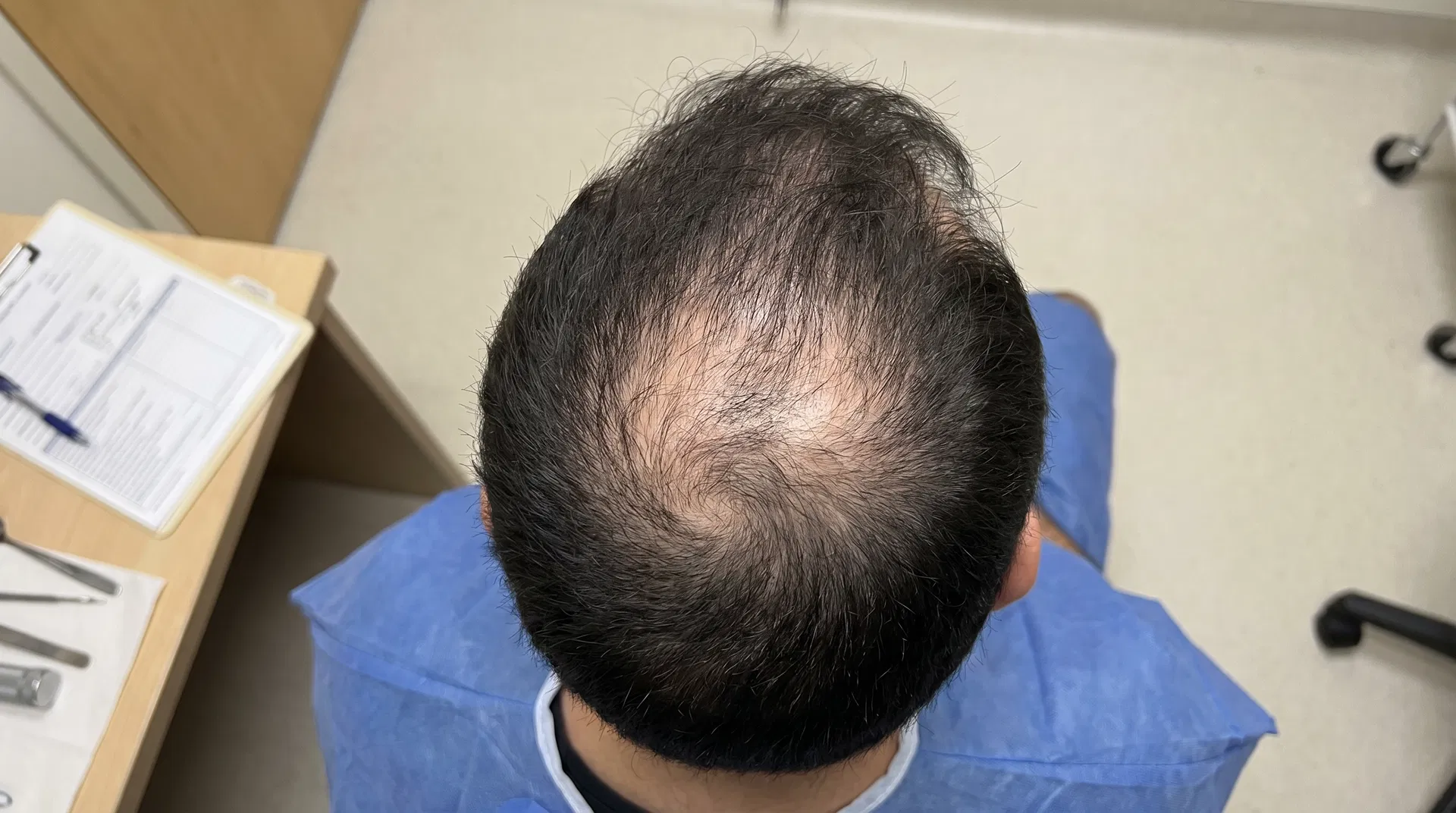
 The crown, or vertex, is a common area for hair loss, but it presents a unique set of challenges for even the most experienced hair transplant surgeons. Restoring this area requires a deep understanding of hair growth patterns and a meticulous approach to achieve a natural-looking result. One of the primary difficulties is the characteristic spiral pattern of hair growth, known as the whorl. To mimic this, a surgeon must carefully place each graft at a precise angle and direction, a task that demands exceptional skill and artistry. If the angles are not perfect, the transplanted hair will not blend seamlessly with the existing hair, leading to an unnatural appearance.
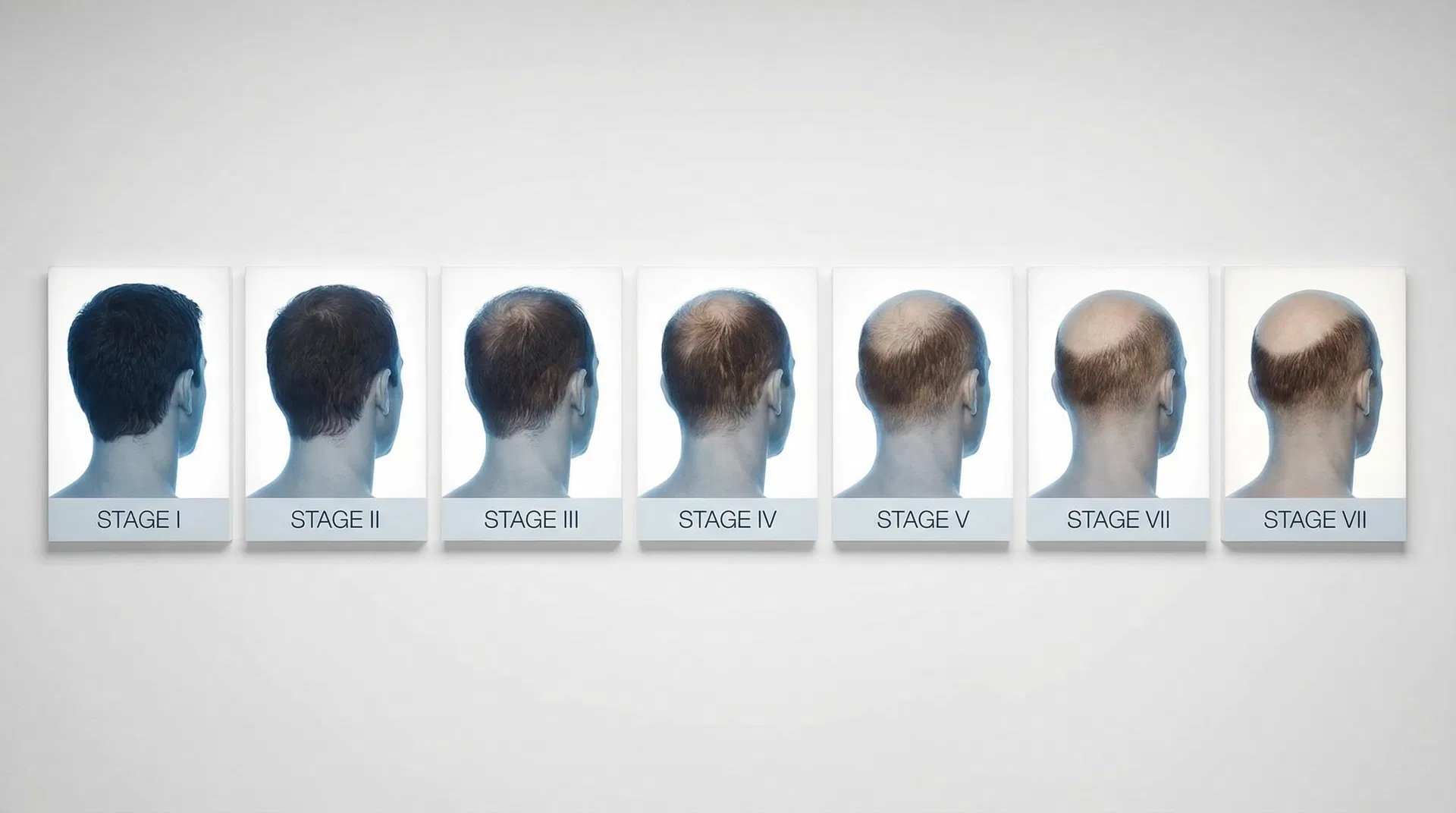
The crown is also a large, relatively flat surface area, which means it often requires a substantial number of grafts to achieve the perception of density. Unlike the hairline, where hair grows more upright, the hair on the crown lies flatter against the scalp. This makes it more challenging to create a look of fullness, as more of the scalp is visible between the hairs. Furthermore, the crown is highly visible from multiple angles, including from above and behind, making any imperfections in the transplant more noticeable. Lastly, the crown is often one of the last areas to stabilize in cases of male pattern baldness. This means that hair loss may continue in the surrounding areas after a transplant, potentially creating an isolated patch of transplanted hair, often referred to as a 'halo' effect.
The crown, or vertex, is a common area for hair loss, but it presents a unique set of challenges for even the most experienced hair transplant surgeons. Restoring this area requires a deep understanding of hair growth patterns and a meticulous approach to achieve a natural-looking result. One of the primary difficulties is the characteristic spiral pattern of hair growth, known as the whorl. To mimic this, a surgeon must carefully place each graft at a precise angle and direction, a task that demands exceptional skill and artistry. If the angles are not perfect, the transplanted hair will not blend seamlessly with the existing hair, leading to an unnatural appearance.
The crown is also a large, relatively flat surface area, which means it often requires a substantial number of grafts to achieve the perception of density. Unlike the hairline, where hair grows more upright, the hair on the crown lies flatter against the scalp. This makes it more challenging to create a look of fullness, as more of the scalp is visible between the hairs. Furthermore, the crown is highly visible from multiple angles, including from above and behind, making any imperfections in the transplant more noticeable. Lastly, the crown is often one of the last areas to stabilize in cases of male pattern baldness. This means that hair loss may continue in the surrounding areas after a transplant, potentially creating an isolated patch of transplanted hair, often referred to as a 'halo' effect.
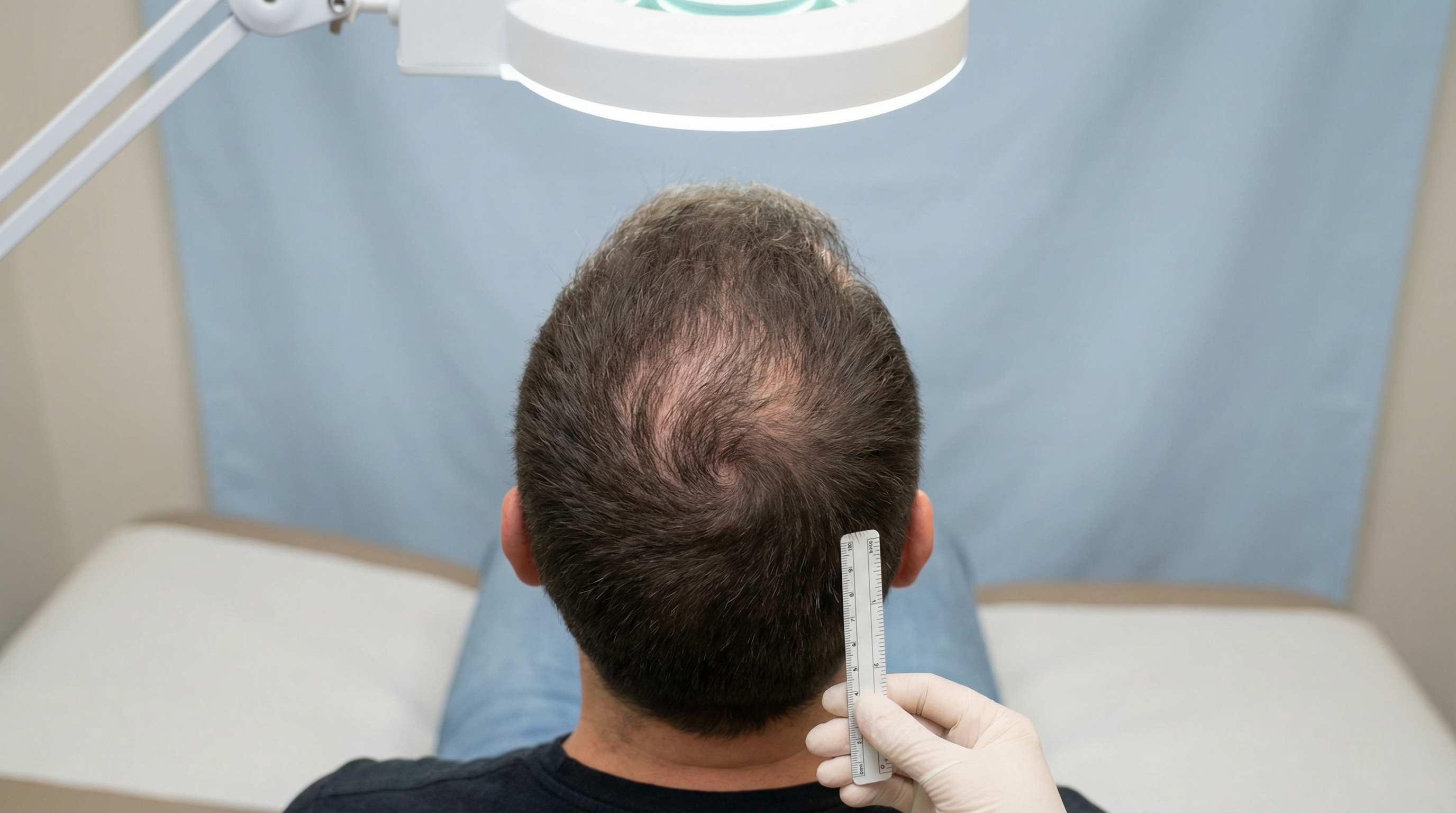 For this reason, a surgeon may recommend waiting until the hair loss pattern has stabilized before performing a transplant in this area.
 Considering crown restoration?
It is a common recommendation from many hair restoration experts to address the hairline first before focusing on the crown, especially if hair loss is present in both areas. This is because the hairline has a more significant impact on one's facial framing and overall appearance. Additionally, since crown hair loss can be progressive, it is often wise to see how the pattern of loss evolves before committing to a transplant in that area. By addressing the hairline first, you and your surgeon can also get a better sense of your donor hair supply and how it can be best utilized for future procedures.
Considering crown restoration?
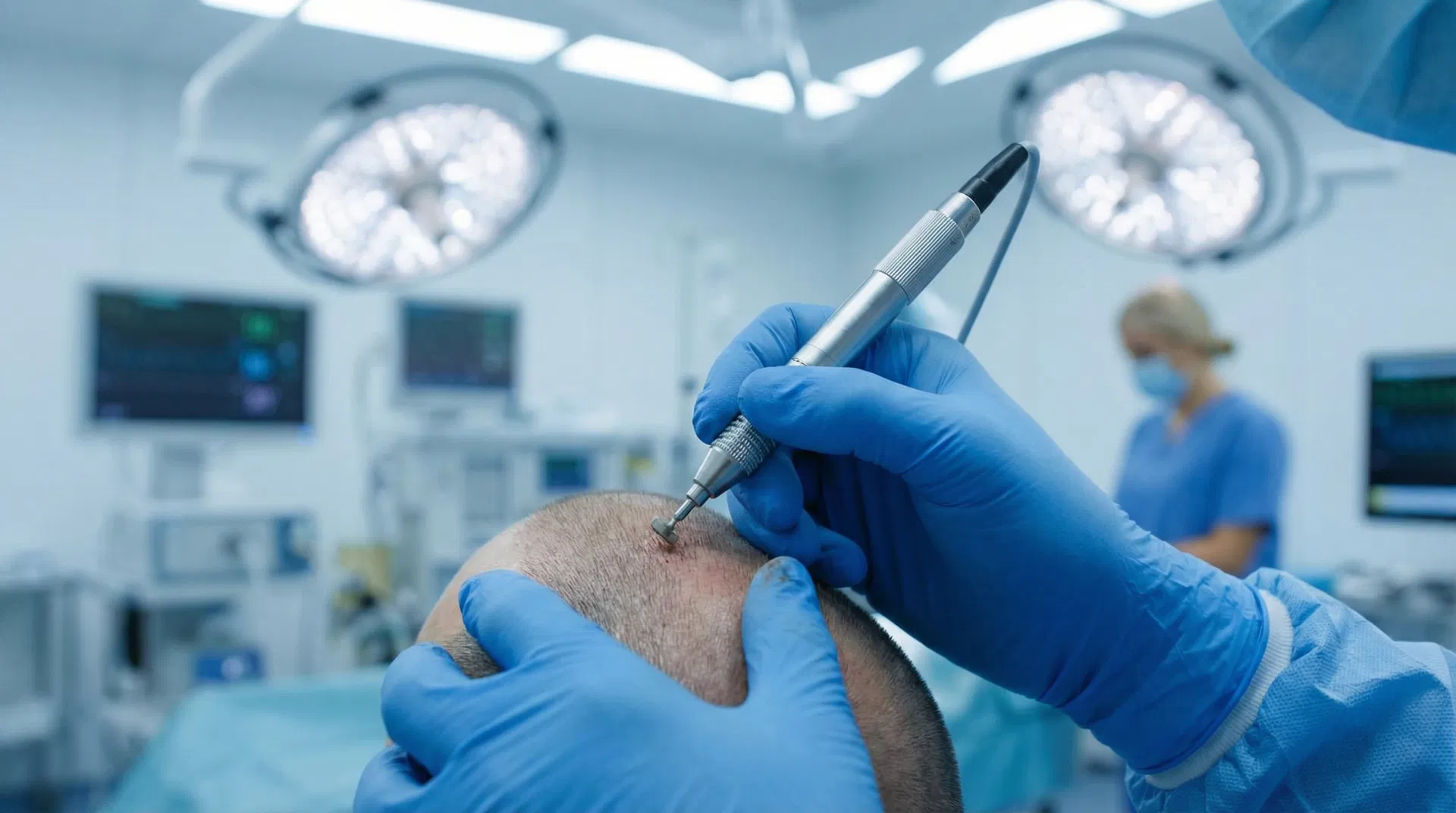
It is a common recommendation from many hair restoration experts to address the hairline first before focusing on the crown, especially if hair loss is present in both areas. This is because the hairline has a more significant impact on one's facial framing and overall appearance. Additionally, since crown hair loss can be progressive, it is often wise to see how the pattern of loss evolves before committing to a transplant in that area. By addressing the hairline first, you and your surgeon can also get a better sense of your donor hair supply and how it can be best utilized for future procedures.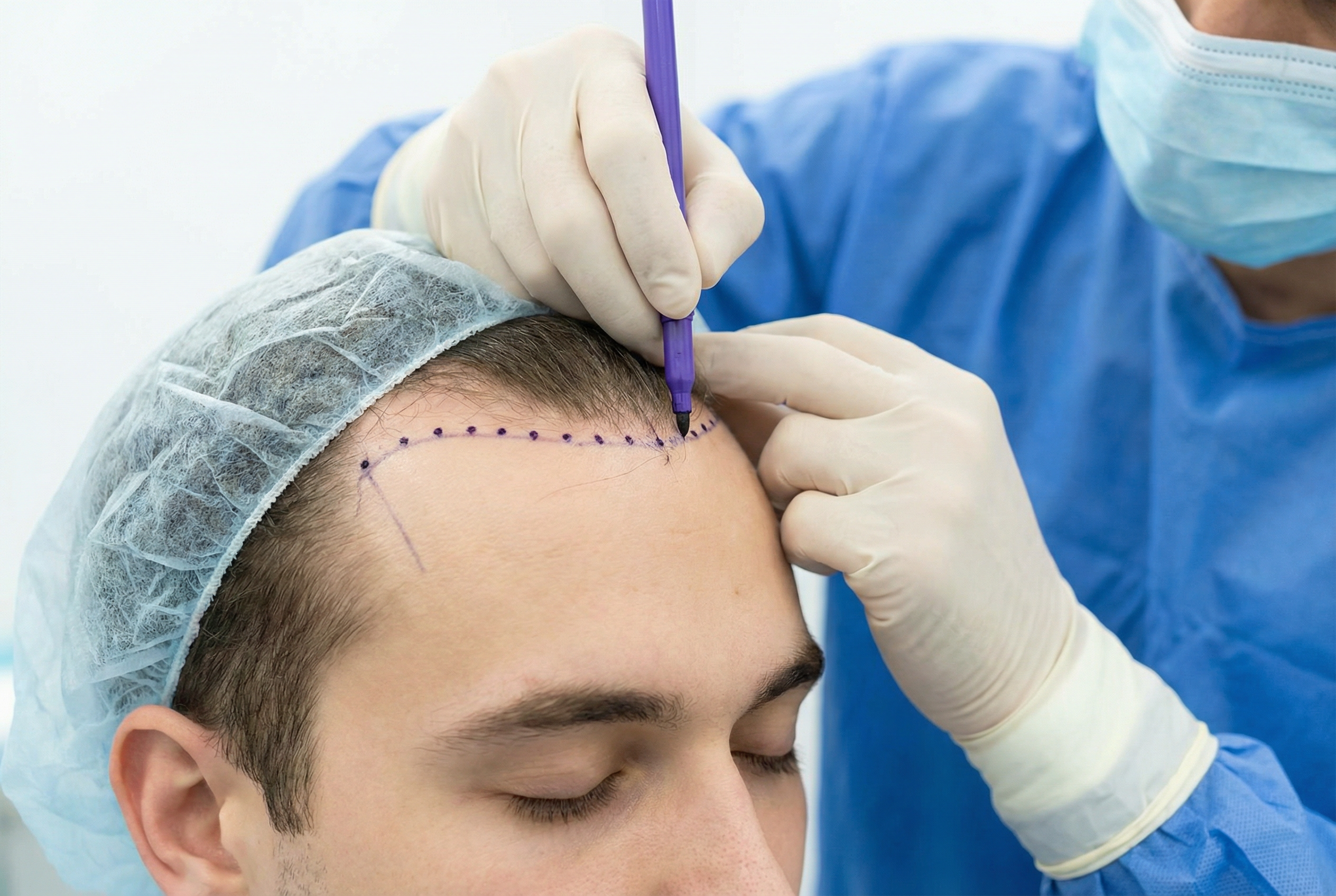 For crown transplants, the Follicular Unit Extraction (FUE) technique is often favored by surgeons. This method allows for the precise extraction and placement of individual hair follicles, which is crucial for replicating the natural whorl pattern of the crown. The ability to control the angle and direction of each graft is paramount for achieving a result that is both dense and natural-looking.
A conservative approach to density is also a common recommendation. It is often better to start with a moderate level of density in the crown and then, if desired, add more grafts in a second session. This approach helps to conserve the donor hair supply, which is a finite resource. Over-harvesting the donor area in a single session can lead to a depleted supply, limiting the options for future procedures. To learn more about the FUE technique,
For crown transplants, the Follicular Unit Extraction (FUE) technique is often favored by surgeons. This method allows for the precise extraction and placement of individual hair follicles, which is crucial for replicating the natural whorl pattern of the crown. The ability to control the angle and direction of each graft is paramount for achieving a result that is both dense and natural-looking.
A conservative approach to density is also a common recommendation. It is often better to start with a moderate level of density in the crown and then, if desired, add more grafts in a second session. This approach helps to conserve the donor hair supply, which is a finite resource. Over-harvesting the donor area in a single session can lead to a depleted supply, limiting the options for future procedures. To learn more about the FUE technique, 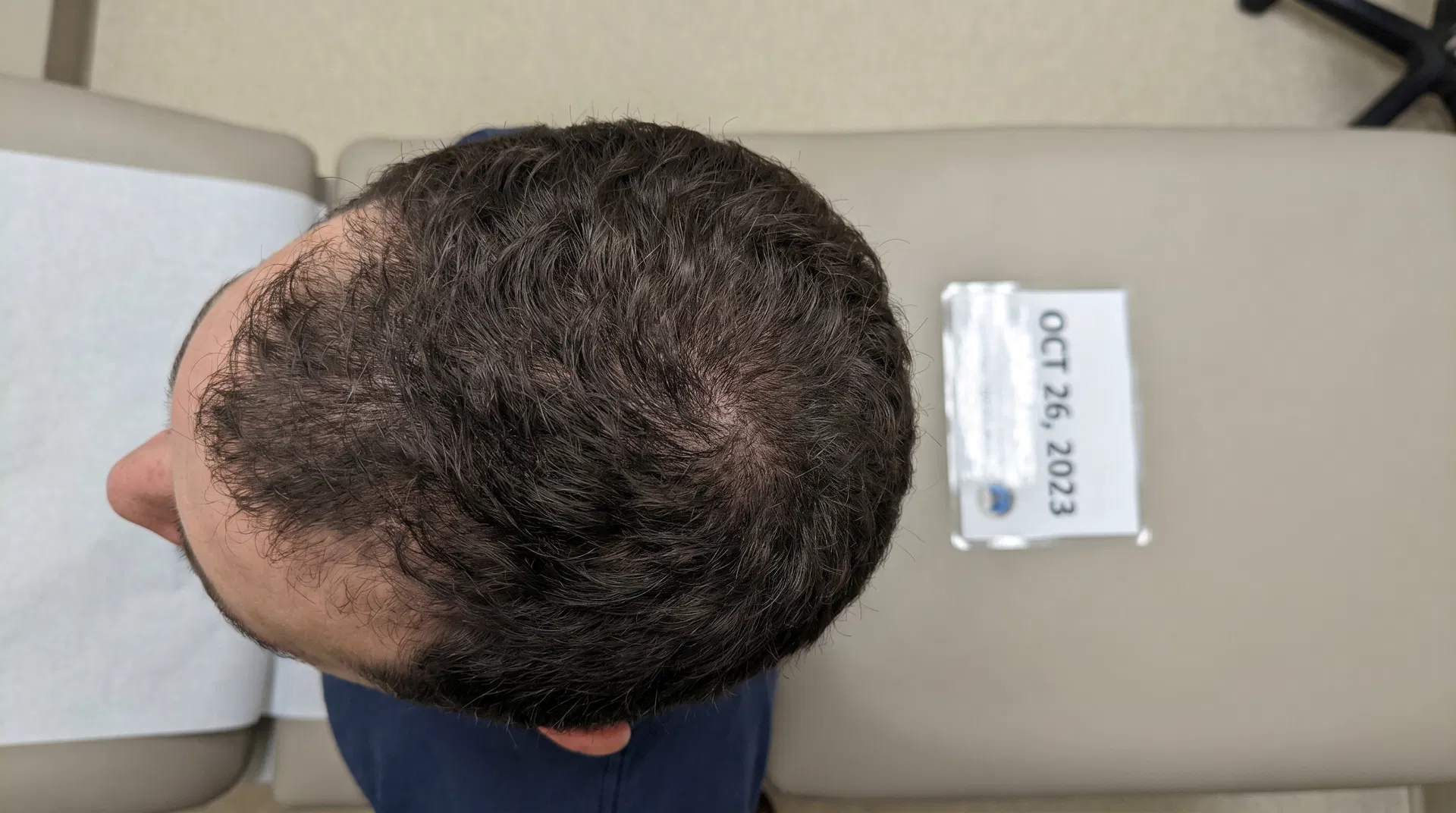 In addition to the surgical technique, medical management of hair loss is particularly important for crown transplant patients. Medications like Finasteride can be very effective in slowing down or even halting the progression of hair loss in the crown area, which is often heavily influenced by the hormone DHT. Finally, it is essential to have realistic expectations about the outcome of a crown transplant. Achieving the appearance of full coverage can be more challenging for the crown compared to the hairline. A thorough discussion with your surgeon will help you understand what is realistically achievable.
Get in touch for a free assessment — vertex transplants require specific expertise we can help you find.
In addition to the surgical technique, medical management of hair loss is particularly important for crown transplant patients. Medications like Finasteride can be very effective in slowing down or even halting the progression of hair loss in the crown area, which is often heavily influenced by the hormone DHT. Finally, it is essential to have realistic expectations about the outcome of a crown transplant. Achieving the appearance of full coverage can be more challenging for the crown compared to the hairline. A thorough discussion with your surgeon will help you understand what is realistically achievable.
Get in touch for a free assessment — vertex transplants require specific expertise we can help you find.