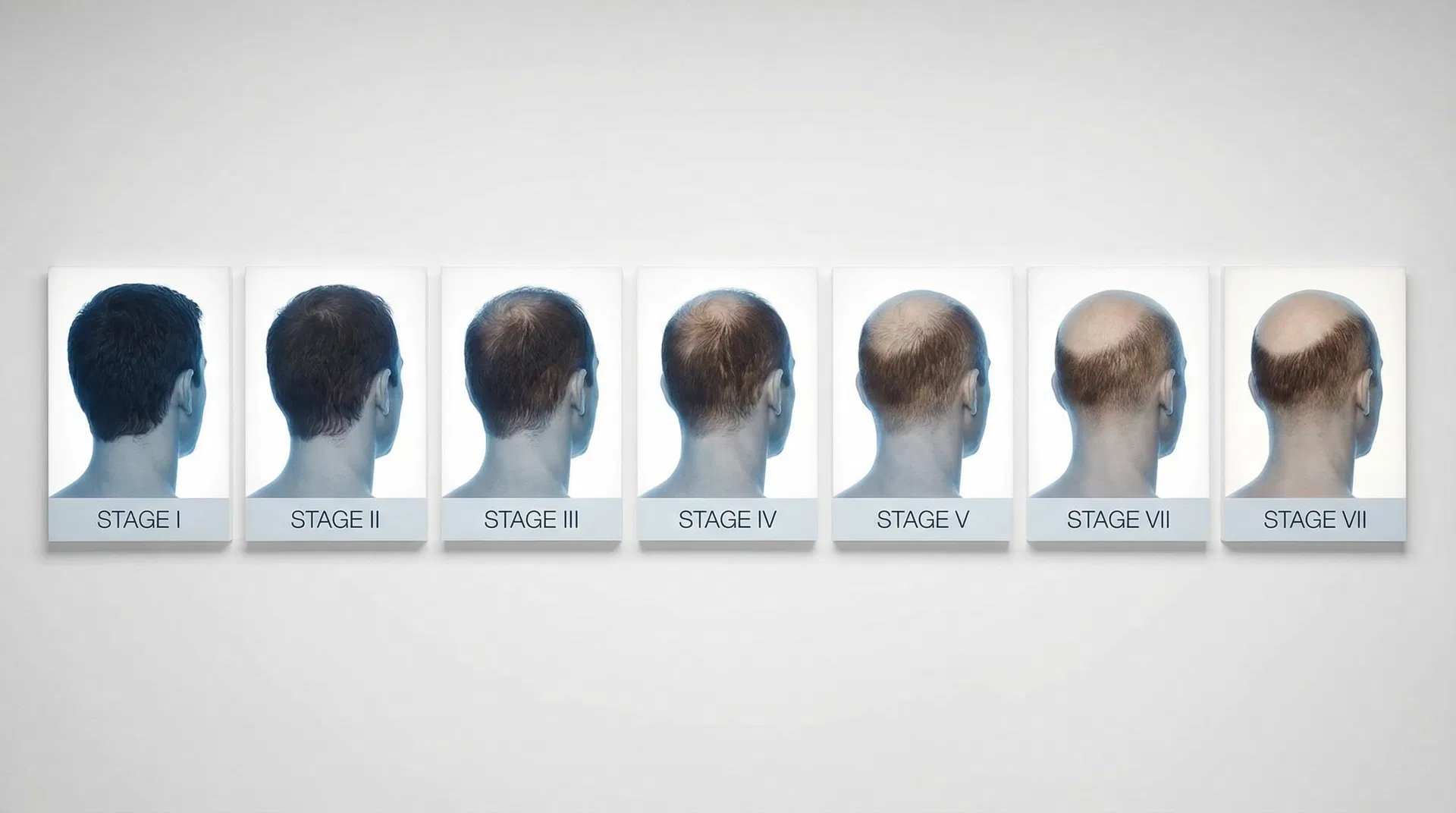
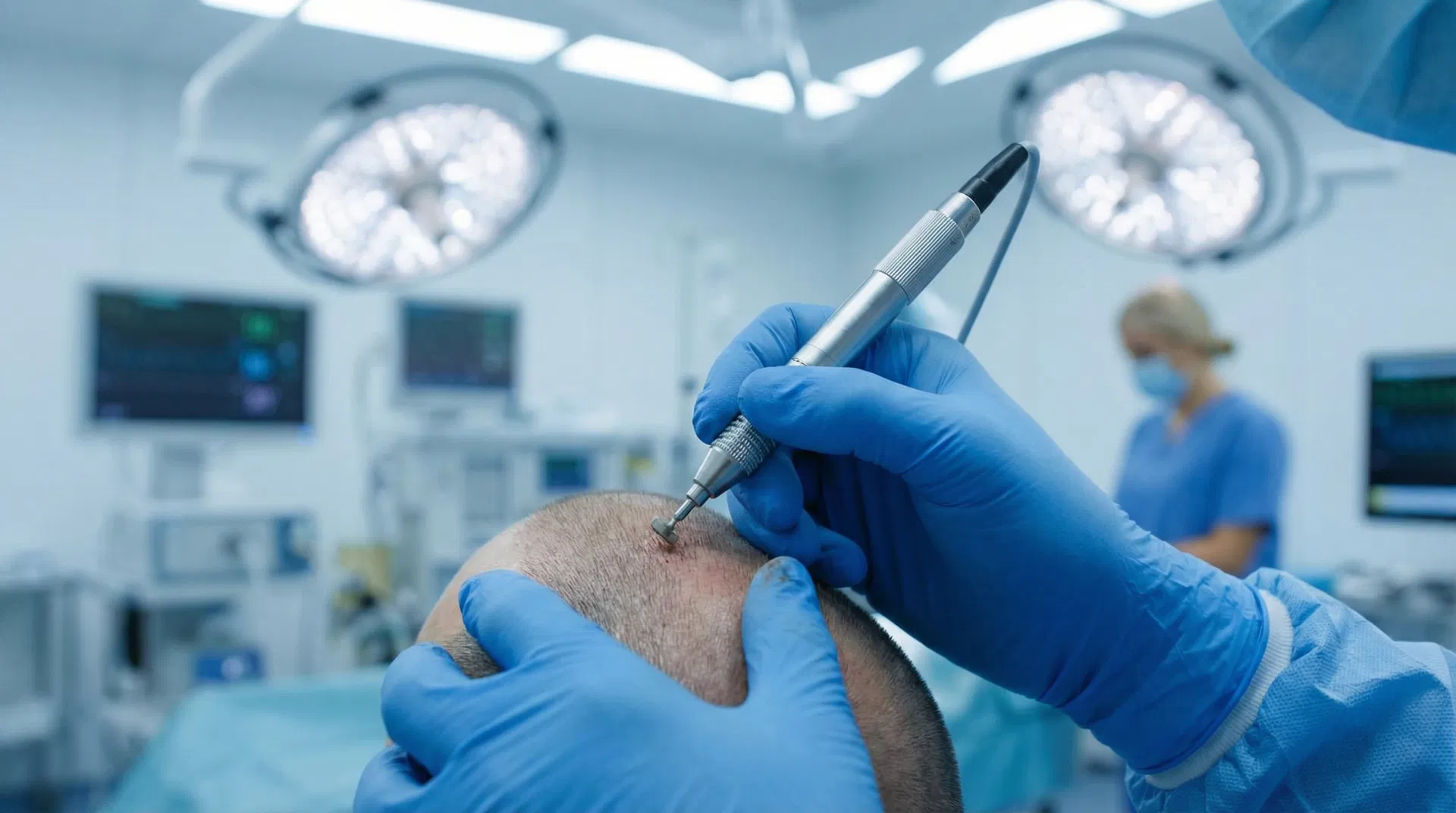
Several interconnected factors influence the final look and feel of your hair transplant. It's a combination of your unique physiology and the skill of the surgical team.
 Donor Hair Quality:
 The characteristics of your donor hair play a significant role. Thick, coarse, or curly hair naturally provides better visual coverage per graft than thin, straight hair. Patients with this hair type often achieve the appearance of higher density with fewer grafts.
Hair and Skin Colour Contrast: The contrast between your hair colour and scalp skin tone affects how dense the hair appears. Lower contrast (e.g., light brown hair on fair skin, or black hair on dark skin) naturally minimizes the visibility of the scalp, creating a fuller look. High contrast (e.g., black hair on very pale skin) can make any thinning more apparent, requiring more precise graft placement.
Graft Survival Rate: The survival of the transplanted grafts is critical. In the hands of a skilled team, a survival rate of 90% to 95% or even higher is standard. This rate is influenced by the surgeon's technique, the care taken by the technicians during extraction and implantation, and, crucially, your adherence to post-operative aftercare instructions. Want a realistic preview of what your results could look like?
Individual Hair Characteristics: Each follicular unit, or graft, can contain one, two, three, or even four individual hairs. Your personal ratio of these multi-hair grafts directly impacts the final density. A surgeon will strategically use single-hair grafts for a soft, natural hairline and multi-hair grafts further back for density.
Surgeon Skill and Artistry: This is perhaps the most critical variable. The surgeon's ability to design a natural, age-appropriate hairline and to place each graft at the correct angle, direction, and distribution is what separates a good result from a great one. This is where the experience and artistic eye of the surgeon truly matter most.
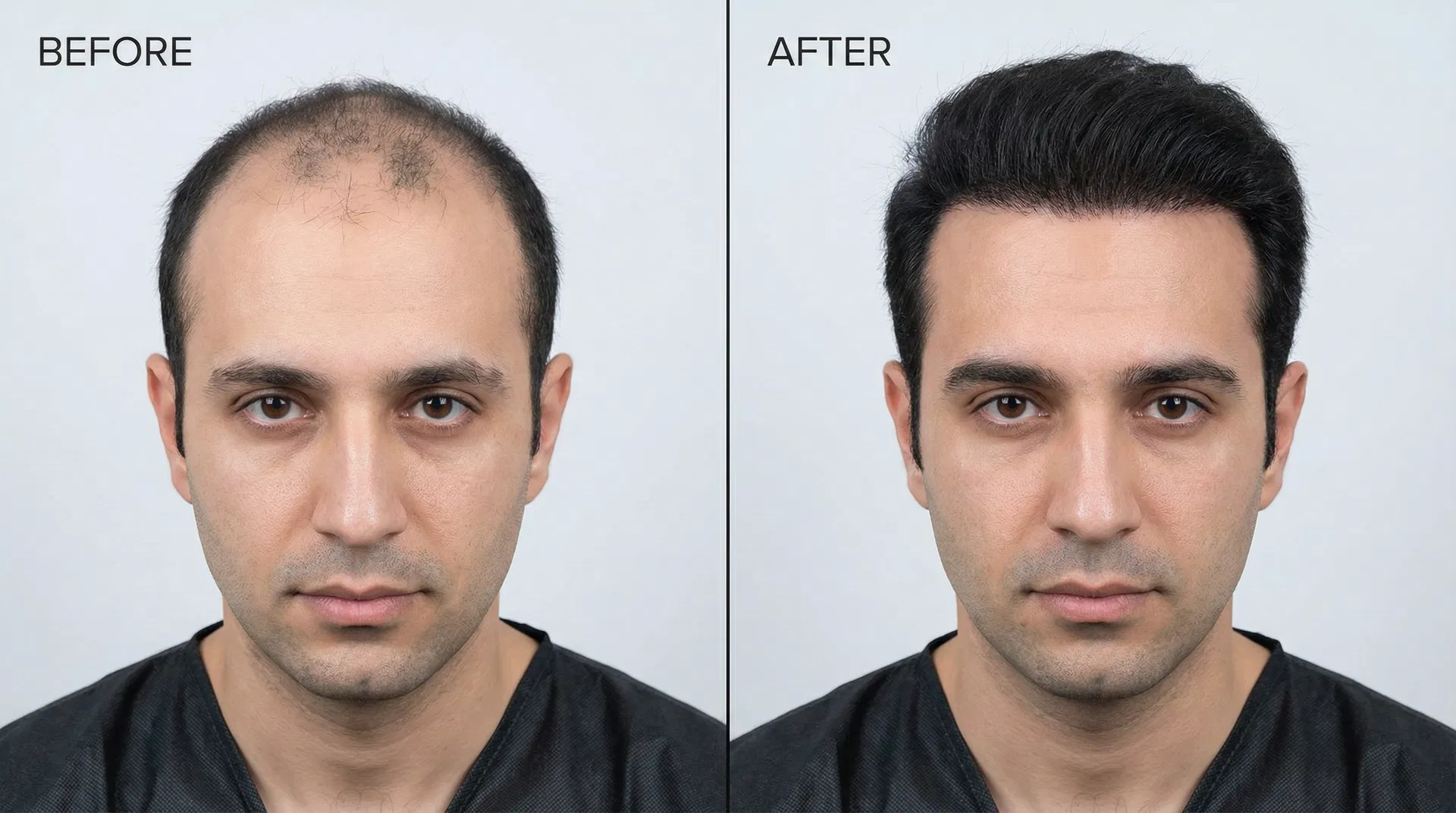
 The single most important factor in patient satisfaction isn't just the technical quality of the transplant — it's ensuring your results align with your expectations. A hair transplant is a process of artistically redistributing your existing healthy hair, not creating new hair follicles. Understanding this fundamental concept is the first step toward a successful and satisfying outcome.
 This means a few things:
- Your donor area, typically the back and sides of your head, has a finite supply of grafts. This is why a thorough consultation is needed to assess your donor capacity.
- Achieving the extremely thick, dense coverage of your youth may not be possible in a single session, especially in advanced cases of hair loss. The goal is to create the most natural and aesthetically pleasing result with the hair available.
- The transplanted hair will continue to age naturally, just like the rest of your hair. It may grey over time, for instance.
- To prevent further loss of your non-transplanted native hair, your specialist might recommend medications like finasteride or minoxidil.
That said, modern hair transplant techniques, particularly FUE and DHI performed in leading Turkish clinics, produce truly remarkable and natural-looking results. When expectations are properly set through clear communication with your clinic, most patients are thrilled with their outcome.
This means a few things:
- Your donor area, typically the back and sides of your head, has a finite supply of grafts. This is why a thorough consultation is needed to assess your donor capacity.
- Achieving the extremely thick, dense coverage of your youth may not be possible in a single session, especially in advanced cases of hair loss. The goal is to create the most natural and aesthetically pleasing result with the hair available.
- The transplanted hair will continue to age naturally, just like the rest of your hair. It may grey over time, for instance.
- To prevent further loss of your non-transplanted native hair, your specialist might recommend medications like finasteride or minoxidil.
That said, modern hair transplant techniques, particularly FUE and DHI performed in leading Turkish clinics, produce truly remarkable and natural-looking results. When expectations are properly set through clear communication with your clinic, most patients are thrilled with their outcome. Send us your details for a free, honest assessment from our team.
 Month 1: The 'Shock Loss' Phase. In the first few weeks, the newly transplanted hairs will fall out. This is a normal and expected part of the process called shock loss. The vital follicle remains dormant and secure beneath the skin.
Months 2 to 3: The Dormant Phase. This is often the most challenging period for patients. There is very little visible change, and your scalp will look much as it did before the surgery. It is crucial to trust the process during this time. The follicles are healthy and preparing for a new growth cycle.
Month 4: The First Signs of Growth. You will begin to see the first new hairs emerge. They will likely be very fine, thin, and wispy at first, almost like baby hairs.
Month 6: Significant Progress. By the six-month mark, you can typically expect to see around 40% to 50% of the final result. The hair will be thicker, longer, and you'll have a much better idea of the emerging hairline and coverage.
Month 9: Nearing the Finish Line. At nine months, roughly 70% to 80% of the final result is visible. The hair has gained significant length and thickness, and the overall appearance is much improved.
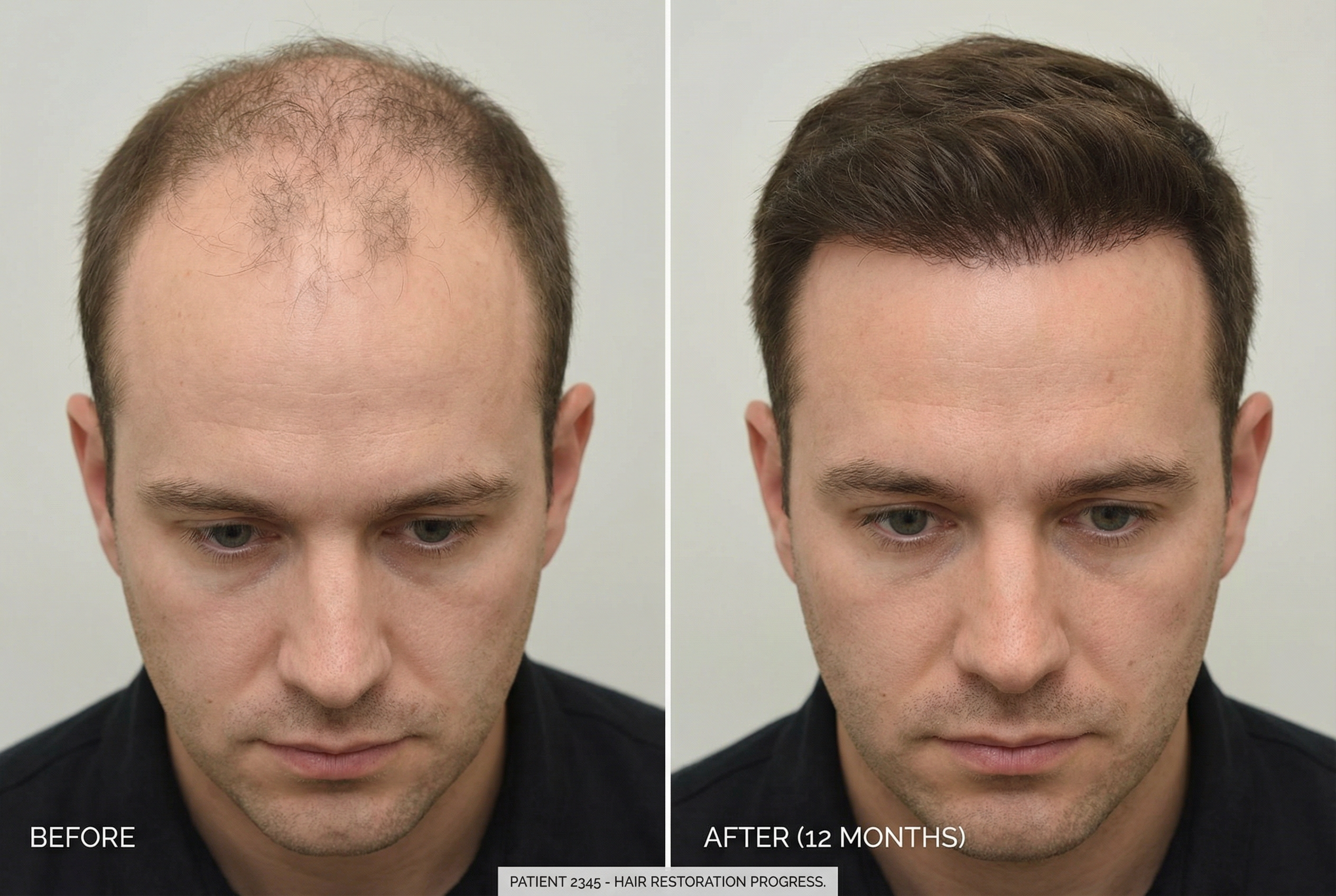
Month 12 to 18: The Final Result. The full, final result of your hair transplant is typically visible between 12 and 18 months post-procedure. The hair has reached its maximum thickness and has matured, blending seamlessly with your native hair. For more information,
Month 1: The 'Shock Loss' Phase. In the first few weeks, the newly transplanted hairs will fall out. This is a normal and expected part of the process called shock loss. The vital follicle remains dormant and secure beneath the skin.
Months 2 to 3: The Dormant Phase. This is often the most challenging period for patients. There is very little visible change, and your scalp will look much as it did before the surgery. It is crucial to trust the process during this time. The follicles are healthy and preparing for a new growth cycle.
Month 4: The First Signs of Growth. You will begin to see the first new hairs emerge. They will likely be very fine, thin, and wispy at first, almost like baby hairs.
Month 6: Significant Progress. By the six-month mark, you can typically expect to see around 40% to 50% of the final result. The hair will be thicker, longer, and you'll have a much better idea of the emerging hairline and coverage.
Month 9: Nearing the Finish Line. At nine months, roughly 70% to 80% of the final result is visible. The hair has gained significant length and thickness, and the overall appearance is much improved.
Month 12 to 18: The Final Result. The full, final result of your hair transplant is typically visible between 12 and 18 months post-procedure. The hair has reached its maximum thickness and has matured, blending seamlessly with your native hair. For more information,