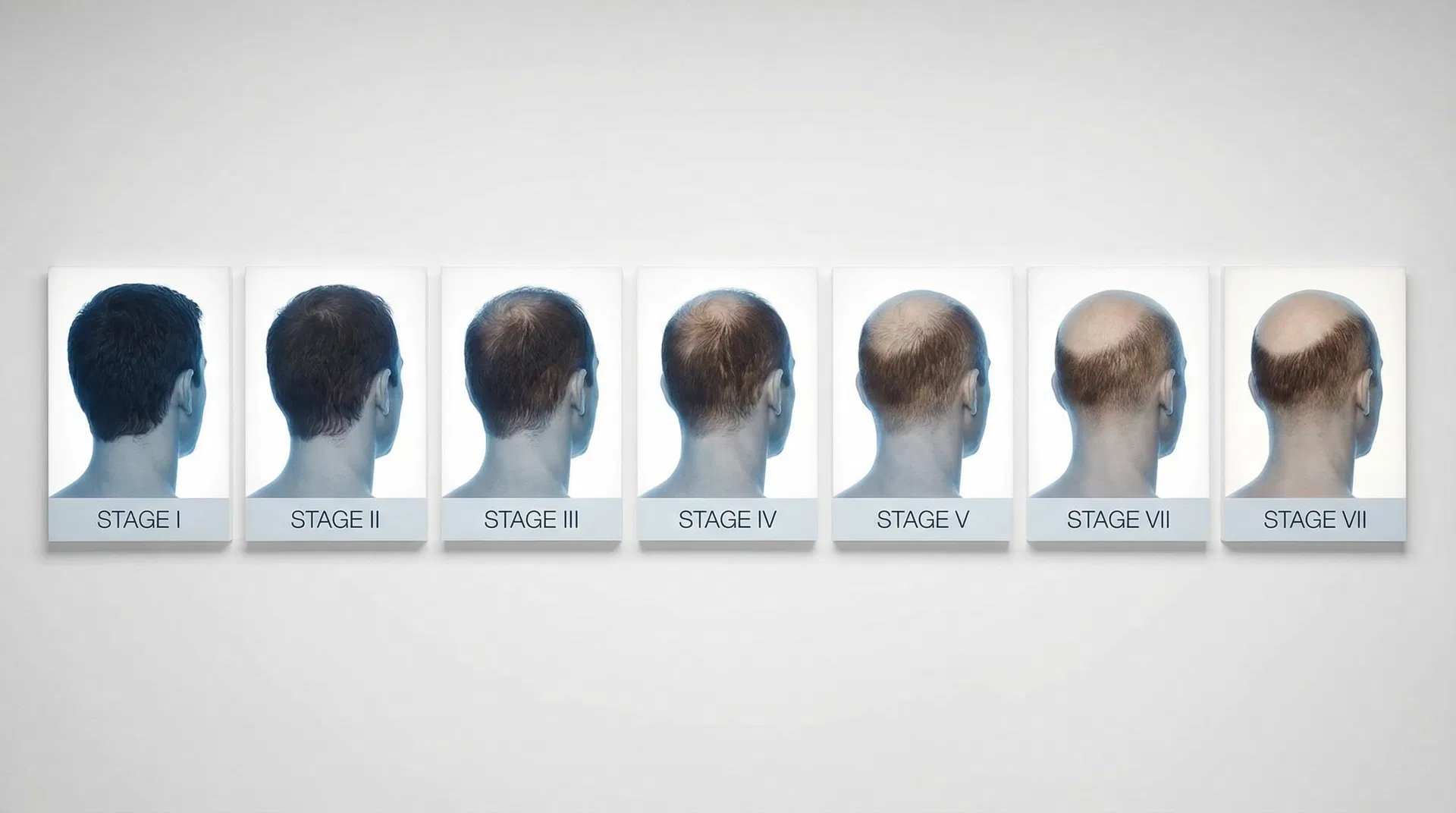
Most experienced and reputable hair restoration surgeons advise younger patients to wait until they are at least twenty-five, and ideally closer to twenty-eight, before committing to a transplant. This recommendation is based on several critical clinical factors that can dramatically influence the long-term success of the procedure.
First and foremost is the unpredictable nature of male pattern baldness in its early stages. A young man who is a Norwood 2 at twenty-two could see his hair loss remain stable for years, or he could rapidly progress to a Norwood 5 or 6. A transplant designed for a minor recession will be woefully inadequate if significant future loss occurs, leaving an isolated patch of transplanted hair. Surgeons must also consider hairline design from a long-term perspective. A lower, more aggressive hairline that seems appropriate for a twenty-two-year-old can appear starkly unnatural on a man of forty-five or fifty. A skilled surgeon designs a mature, timeless hairline that will look appropriate for decades to come.

Furthermore, preserving the finite donor hair supply is paramount. The back and sides of the scalp contain a limited number of follicles that are genetically resistant to balding. If a large number of these grafts are used in an aggressive, early transplant, there may not be enough donor hair available for subsequent procedures needed to address continued thinning in other areas. Finally, medical treatments like Finasteride and Minoxidil are often highly effective at stabilizing hair loss, particularly in younger men. Committing to a consistent medical regimen for at least a year can often slow or even halt the progression of hair loss, potentially delaying the need for a transplant by several years and allowing for a more predictable, successful surgical plan when the time is right. In your twenties and thinking about a transplant?

 However, a hair transplant is a significant and permanent medical procedure. It requires careful consideration of how your hair loss might evolve over your entire lifetime. An impulsive decision, driven by the immediate emotional impact, can lead to results that look excellent at twenty-five but become unnatural or problematic by the time you reach forty. This guide is designed not to deter young men from considering transplants, but to provide the insights needed to make a well-informed decision that ensures a positive and lasting outcome.
 Reach out for a free evaluation — we'll give you honest advice on timing and expectations.
 During this period, diligently document your hair’s condition with clear, consistent monthly photos. This visual record will be invaluable for tracking the rate of progression or stabilization. Once you have this foundation of information, seek out consultations from two or three different, highly-regarded clinics. This will give you a range of expert opinions. Be wary of any clinic that pressures you into making a hasty decision or promises a result that seems too good to be true. Remember, a carefully planned transplant at twenty-eight or twenty-nine will almost always yield a better lifetime result than an impulsive one at twenty-two. To see what is possible, check out our