The recovery process for an eyebrow transplant is generally straightforward and involves minimal discomfort. However, following your surgeon's aftercare instructions carefully is essential for achieving the best possible results.
Initial Recovery (First Two Weeks):
-
Days 1 to 3: You will notice small scabs forming around each transplanted graft. There may be mild swelling and redness in the brow area. Most patients describe the discomfort as minimal, similar to a mild sunburn. You should avoid touching, rubbing, or wetting the area.
-
Days 4 to 7: Swelling subsides and scabs begin to dry. You can gently clean the area as instructed by your surgeon. Most patients feel comfortable returning to work and social activities by day 5 to 7.
-
Days 7 to 14: The scabs will naturally fall off. You may experience some mild itching, which is a normal sign of healing. Do not pick at the scabs, as this can dislodge the grafts.
The Growth Cycle (Months 1 to 12):
-
Weeks 2 to 4: Expect to experience 'shock loss,' where the initially transplanted hairs fall out. This is completely normal and expected — the follicles are entering a resting phase before producing new, permanent growth.
-
Months 3 to 4: New eyebrow hairs begin to emerge from the transplanted follicles. The growth may appear uneven at first, which is normal.
-
Months 6 to 8: Significant growth is visible and the brows begin to take their final shape. You will start to see the density and definition you were hoping for.
-
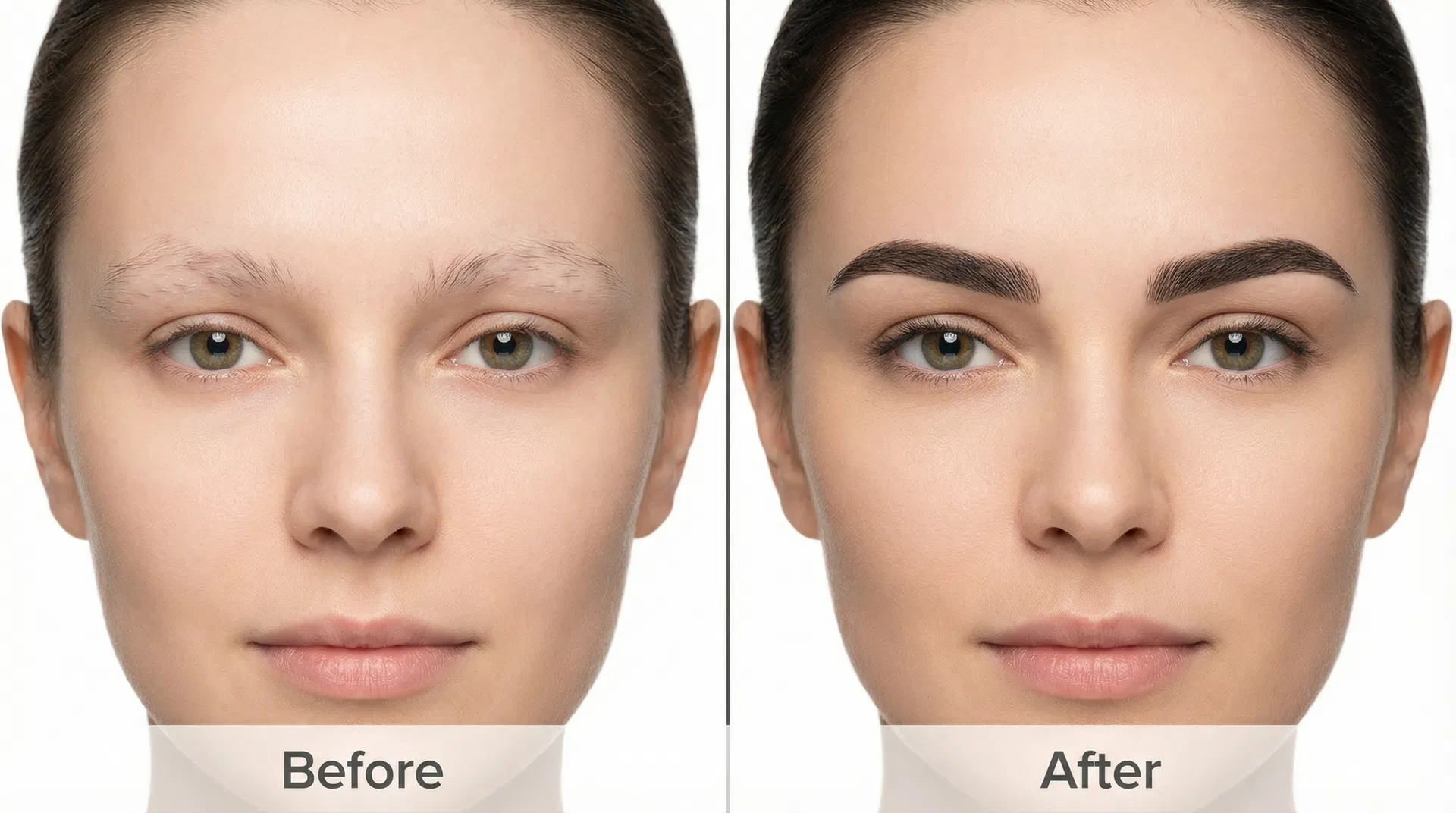
Months 10 to 12: The full, final results of your eyebrow transplant become visible, revealing denser, well-defined brows that frame your face beautifully.
 Long-Term Maintenance:
An important aspect of eyebrow transplants that every patient should understand is the ongoing maintenance requirement. Since the transplanted hairs originate from your scalp, they retain their scalp characteristics — meaning they will continue to grow longer than natural eyebrow hairs. To maintain your desired look, you will need to trim your new eyebrows regularly, typically every one to two weeks. While this is a permanent commitment, most patients find it becomes a quick and simple part of their grooming routine, taking just a minute or two with small grooming scissors.
Over time, many patients find that the transplanted hairs gradually adapt somewhat to their new location, growing slightly slower and finer than they did on the scalp, though regular trimming will always be necessary.

 An eyebrow transplant is a highly refined cosmetic procedure that uses advanced hair restoration techniques to permanently restore thin, sparse, or missing eyebrows. The procedure involves transferring individual hair follicles from a donor area, typically the back of the scalp, to the eyebrow region using techniques such as FUE (Follicular Unit Extraction) or DHI (Direct Hair Implantation).
Unlike microblading or cosmetic tattooing, which fade over time and require regular touch-ups, an eyebrow transplant produces real, growing hair that is permanent. The results look and feel completely natural because they are your own hair follicles, transplanted to a new location.
An eyebrow transplant is a highly refined cosmetic procedure that uses advanced hair restoration techniques to permanently restore thin, sparse, or missing eyebrows. The procedure involves transferring individual hair follicles from a donor area, typically the back of the scalp, to the eyebrow region using techniques such as FUE (Follicular Unit Extraction) or DHI (Direct Hair Implantation).
Unlike microblading or cosmetic tattooing, which fade over time and require regular touch-ups, an eyebrow transplant produces real, growing hair that is permanent. The results look and feel completely natural because they are your own hair follicles, transplanted to a new location.
 The causes of eyebrow hair loss are varied and often deeply personal. Many people experience thinning from years of over-plucking or waxing, where the follicles eventually stop producing hair altogether. Others have naturally thin or sparse brows due to genetics. Medical conditions such as alopecia areata, thyroid disorders, and the after-effects of chemotherapy can also cause significant eyebrow loss. Scarring from burns, injuries, or previous surgeries is another common reason people seek this procedure.
A typical eyebrow transplant involves the transfer of 200 to 400 individual hair grafts per eyebrow. While this is a smaller number compared to a scalp hair transplant, the procedure demands an extraordinary level of precision and artistry. Eyebrow hairs grow at a very sharp, almost flat angle against the skin, and their direction changes dynamically across the length of the brow. The surgeon must place each graft at the exact correct angle and direction to create a seamless, natural appearance that complements your facial features.
The causes of eyebrow hair loss are varied and often deeply personal. Many people experience thinning from years of over-plucking or waxing, where the follicles eventually stop producing hair altogether. Others have naturally thin or sparse brows due to genetics. Medical conditions such as alopecia areata, thyroid disorders, and the after-effects of chemotherapy can also cause significant eyebrow loss. Scarring from burns, injuries, or previous surgeries is another common reason people seek this procedure.
A typical eyebrow transplant involves the transfer of 200 to 400 individual hair grafts per eyebrow. While this is a smaller number compared to a scalp hair transplant, the procedure demands an extraordinary level of precision and artistry. Eyebrow hairs grow at a very sharp, almost flat angle against the skin, and their direction changes dynamically across the length of the brow. The surgeon must place each graft at the exact correct angle and direction to create a seamless, natural appearance that complements your facial features.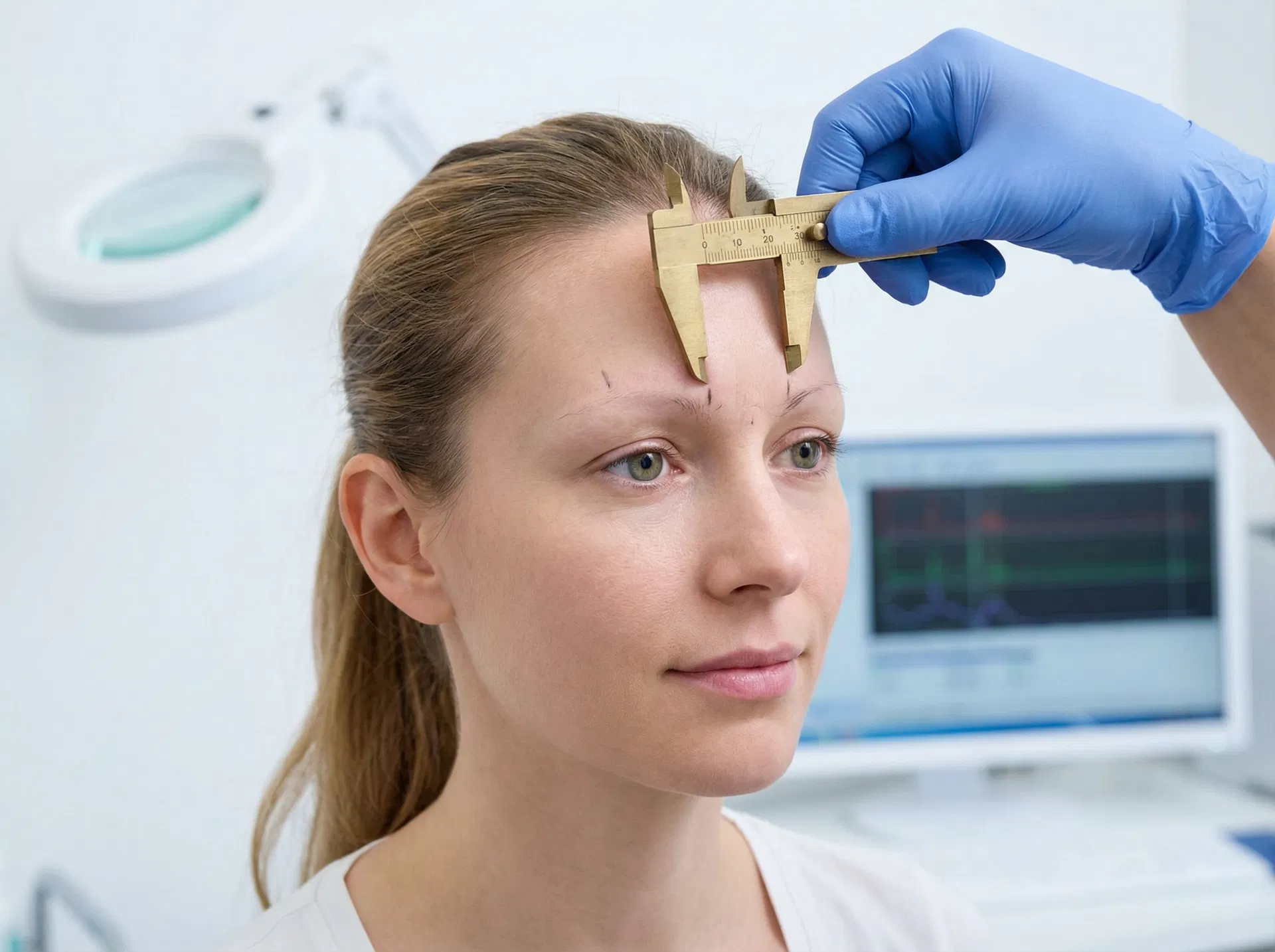 An eyebrow transplant is where surgical precision meets artistic vision. The process is meticulously planned and executed to create brows that are not only full but also perfectly suited to your unique facial features.
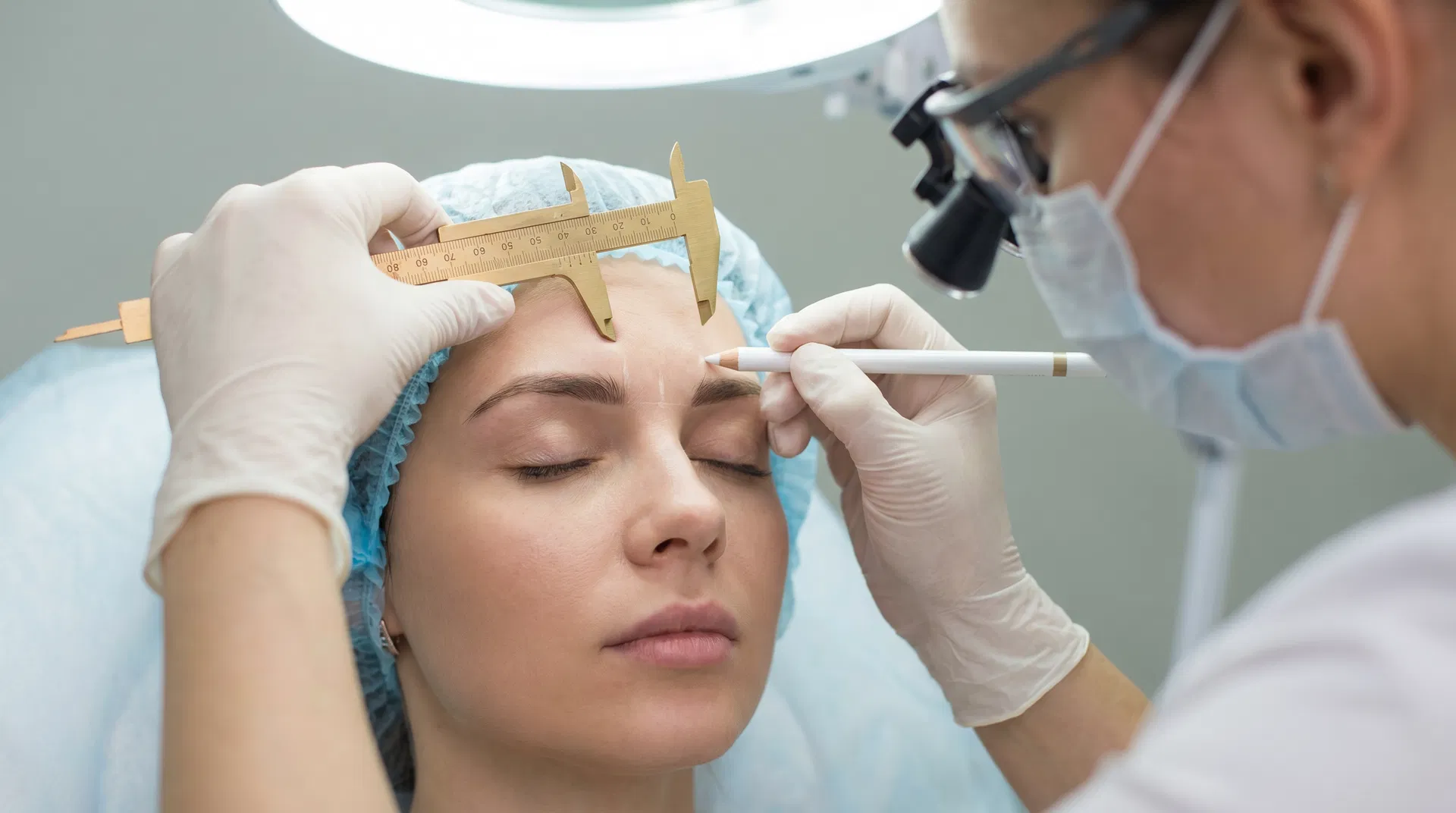
The journey begins with a detailed consultation where the surgeon assesses your facial structure, skin tone, existing brow hair, and overall aesthetic goals. Using specialized tools such as golden ratio calipers, the surgeon will carefully measure and design the ideal eyebrow shape for your face. This design phase is collaborative — you will see the proposed shape drawn on your skin and have the opportunity to request adjustments before any work begins.
The design phase is arguably the most important step. A skilled surgeon will consider the golden ratio, your natural brow bone structure, and the symmetry of your face to create a shape that looks naturally beautiful rather than artificial.
2. Donor Hair Selection and Extraction
An eyebrow transplant is where surgical precision meets artistic vision. The process is meticulously planned and executed to create brows that are not only full but also perfectly suited to your unique facial features.
The journey begins with a detailed consultation where the surgeon assesses your facial structure, skin tone, existing brow hair, and overall aesthetic goals. Using specialized tools such as golden ratio calipers, the surgeon will carefully measure and design the ideal eyebrow shape for your face. This design phase is collaborative — you will see the proposed shape drawn on your skin and have the opportunity to request adjustments before any work begins.
The design phase is arguably the most important step. A skilled surgeon will consider the golden ratio, your natural brow bone structure, and the symmetry of your face to create a shape that looks naturally beautiful rather than artificial.
2. Donor Hair Selection and Extraction
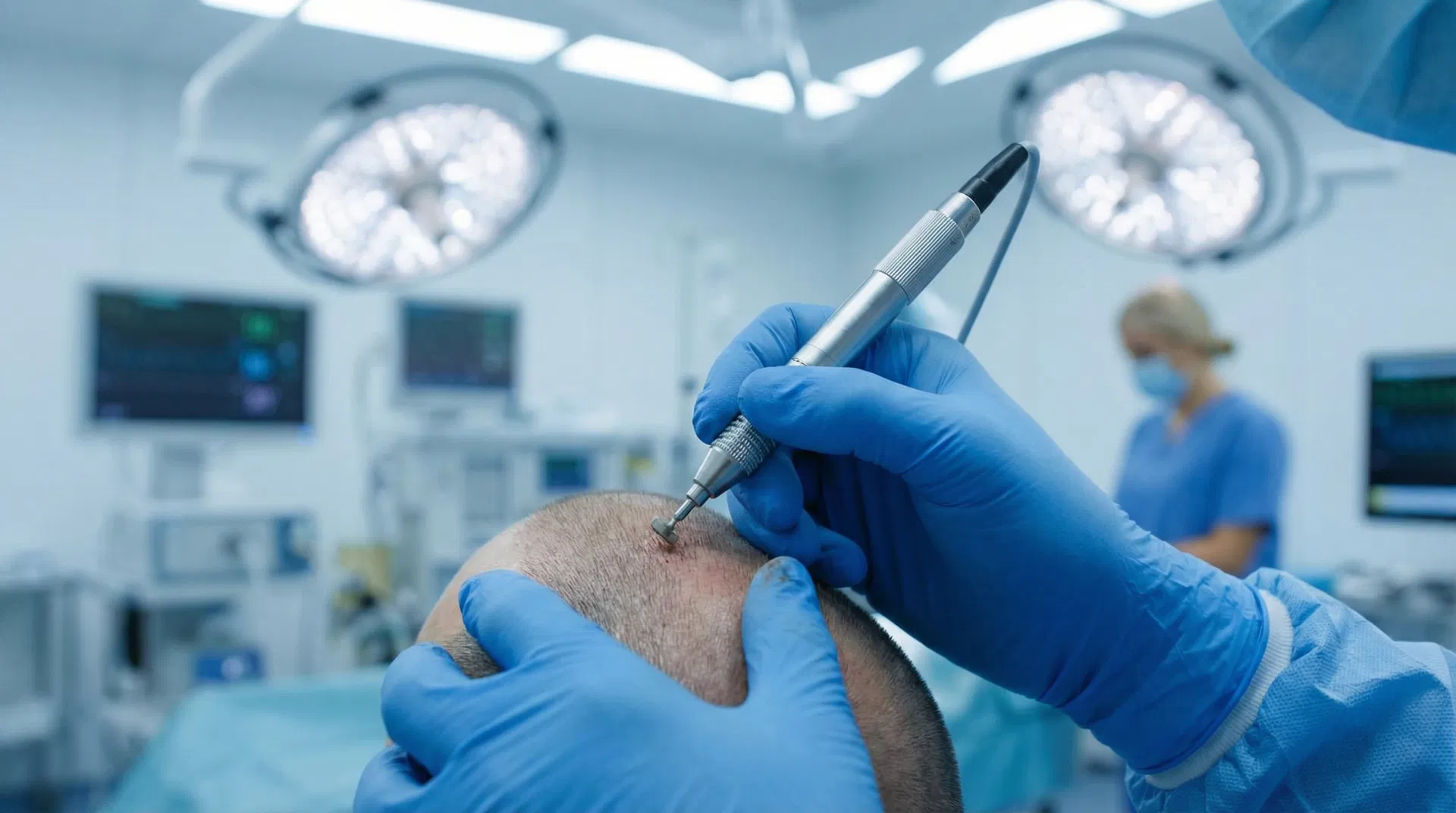
 The surgeon carefully selects and extracts fine, single-hair grafts from the donor area at the back of your scalp. Only the thinnest, finest hairs are hand-picked to ensure they closely match the texture and caliber of natural eyebrow hair. This selective approach is crucial for achieving results that look and feel completely real. The extraction is performed under local anesthesia and is virtually painless.
3. Precision Implantation with DHI
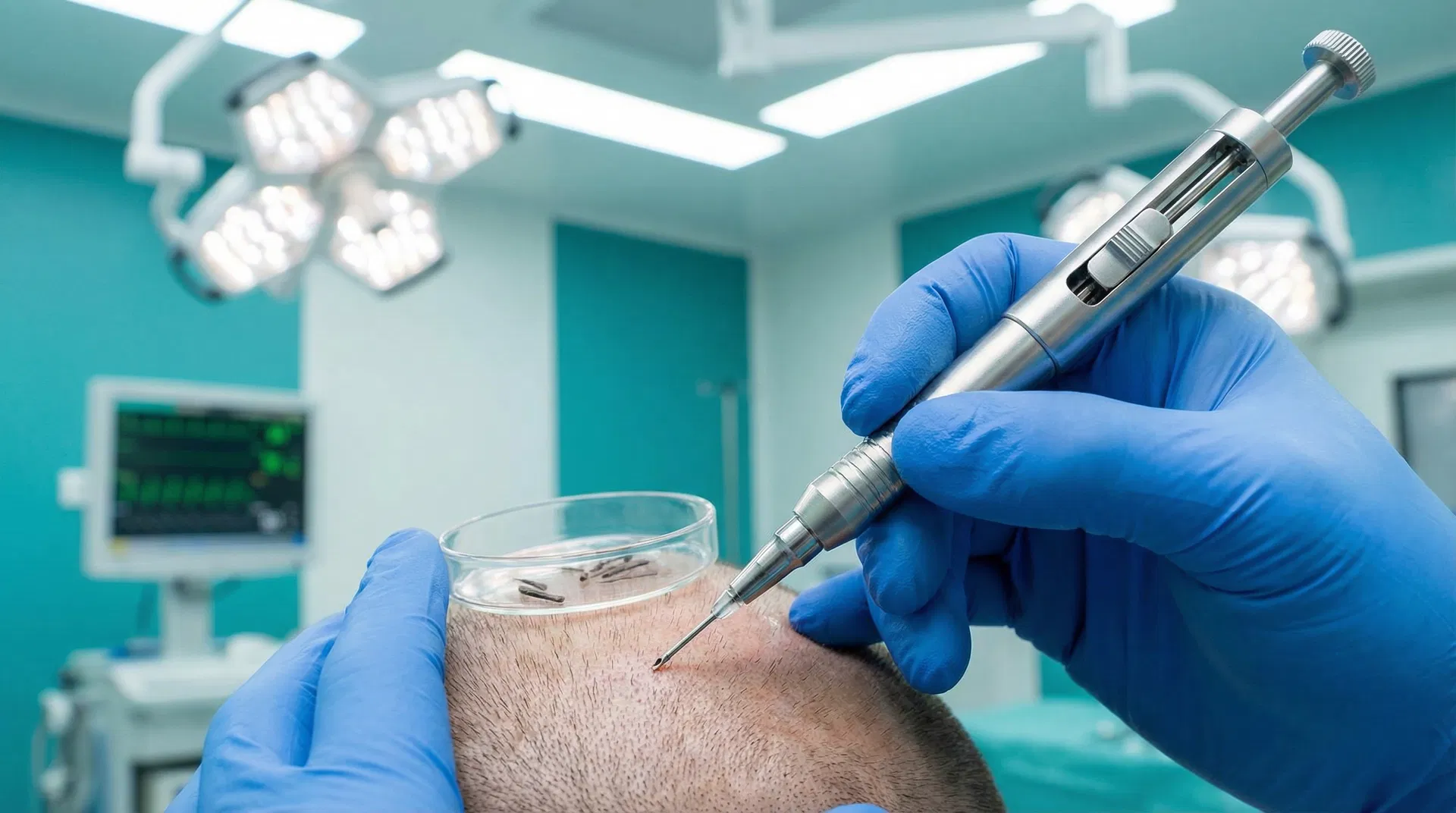
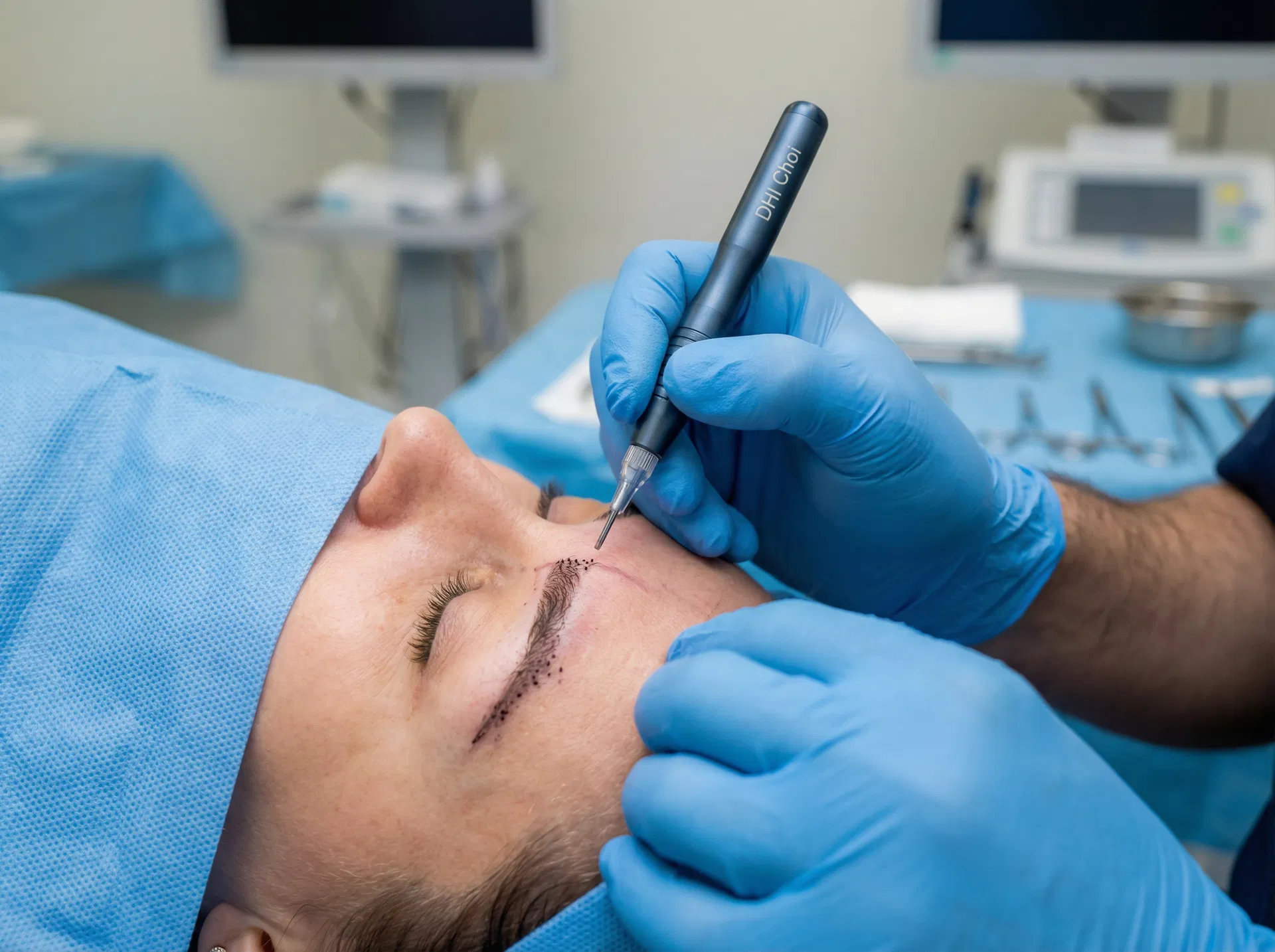
Using the DHI (Direct Hair Implantation) technique with a specialized Choi implanter pen, each graft is implanted one by one into the eyebrow area. This method provides unparalleled control over three critical factors: the depth of placement, the angle of the hair, and the direction of growth.
Eyebrow hairs grow almost flat against the skin at an angle of just 10 to 15 degrees, and their direction changes across the brow — hairs in the inner brow grow upward, while those in the body and tail grow more laterally. The surgeon must replicate these natural growth patterns precisely for each individual graft. The entire procedure for both eyebrows typically takes between three to five hours.
DHI is the preferred method for eyebrow transplants among leading surgeons because it minimizes handling of the delicate grafts and allows for the precise artistic control needed to create beautiful, natural-looking eyebrows.
The surgeon carefully selects and extracts fine, single-hair grafts from the donor area at the back of your scalp. Only the thinnest, finest hairs are hand-picked to ensure they closely match the texture and caliber of natural eyebrow hair. This selective approach is crucial for achieving results that look and feel completely real. The extraction is performed under local anesthesia and is virtually painless.
3. Precision Implantation with DHI
Using the DHI (Direct Hair Implantation) technique with a specialized Choi implanter pen, each graft is implanted one by one into the eyebrow area. This method provides unparalleled control over three critical factors: the depth of placement, the angle of the hair, and the direction of growth.
Eyebrow hairs grow almost flat against the skin at an angle of just 10 to 15 degrees, and their direction changes across the brow — hairs in the inner brow grow upward, while those in the body and tail grow more laterally. The surgeon must replicate these natural growth patterns precisely for each individual graft. The entire procedure for both eyebrows typically takes between three to five hours.
DHI is the preferred method for eyebrow transplants among leading surgeons because it minimizes handling of the delicate grafts and allows for the precise artistic control needed to create beautiful, natural-looking eyebrows. A Destination Worth Visiting: Beyond the medical benefits, Istanbul is a fascinating city that offers world-class dining, stunning historical sites, and vibrant culture. Many patients choose to extend their stay by a day or two to explore the city. For more on what Istanbul has to offer, see our
  Eyebrow Transplant Costs in Canada: The same procedure in Canada typically costs between $6,000 and $12,000 CAD, and this price usually covers only the surgery itself — accommodation, travel, and other expenses are additional.